
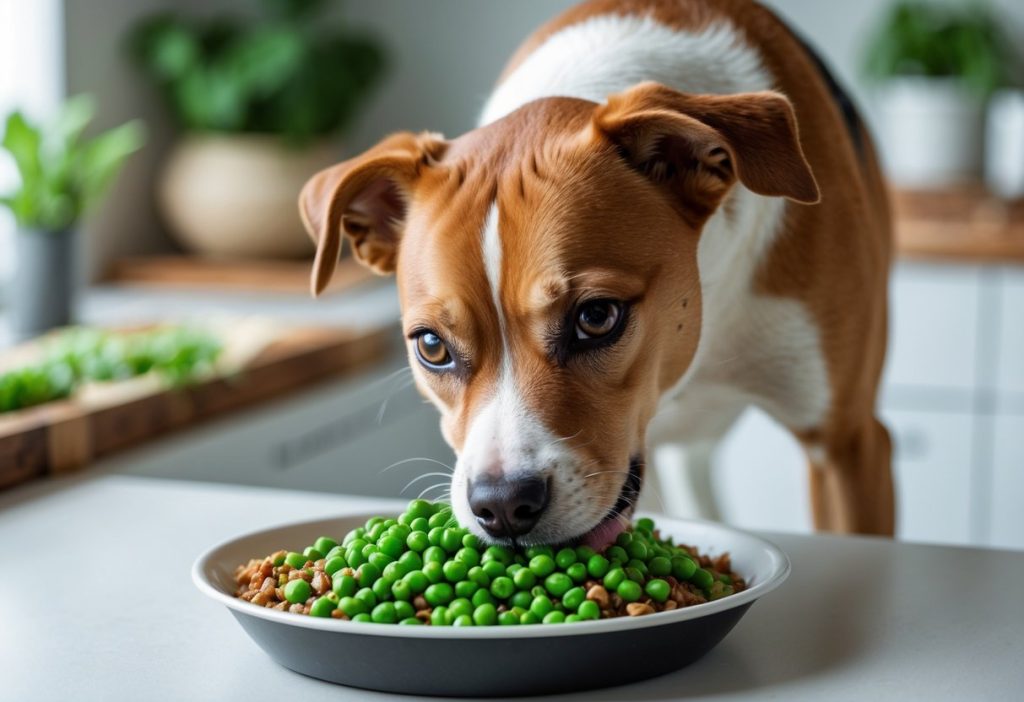
Disclaimer: This article is for informational purposes only and should not replace professional veterinary advice. Always consult your veterinarian before adding new foods to your dog’s diet, especially if your pet has kidney, digestive, or metabolic issues.
Many dog owners wonder if those little green spheres rolling around their dinner plates could make their furry friends happier and healthier. The answer might surprise them.
Fresh peas offer dogs a natural source of vitamins, fiber, and plant protein that can boost their health in ways most pet parents never considered. These tiny vegetables pack nutrients that support everything from digestion to eye health.
This guide explores nine science‑backed reasons why peas deserve consideration as a regular addition to your dog’s meal plan. From sneaky protein boosts to antioxidant power, these green gems offer benefits that go far beyond their small size.
1) Peas Are Tiny Green Powerhouses Packed With Vitamins That Make Your Dog’s Tail Wag
Fresh peas might look small, but they pack a serious vitamin punch. These little green balls are loaded with vitamin A, which supports your pup’s vision, skin, and immune health.
Vitamin C helps strengthen your dog’s immune defenses and may assist in natural tissue repair.
Vitamin K plays a key role in blood clotting, helping your dog heal faster from minor scrapes.
B‑vitamins (like B1, B6, and B9/folate) help convert food into energy and support the nervous system. Folate also contributes to cell growth and repair.
Together, these vitamins form a nutrient team that helps dogs feel good from their wet nose to their wagging tail. Many pups also love the natural sweetness of peas — they think they’re getting a treat when they’re actually eating something healthy.
2) They’re Like Little Crunchy Peas of Joy in Every Bite!
Dogs love the satisfying crunch that fresh peas provide. Each pea makes a tiny pop sound when they bite down, which keeps snack time fun.
The firm texture encourages chewing, which can help scrape away plaque and promote dental health. Some dogs even chase peas around their bowl like tiny green toys, turning mealtime into playtime.
Many pups get excited when they hear peas being poured into their bowl — that sound means something tasty is coming. Whether they savor each pea one at a time or gobble them up all at once, the crunch satisfies their natural urge to chew.
3) Peas Add Fiber to Your Dog’s Meal, Helping With… You Know, the Other End of Things
Let’s talk about poop. Every dog owner knows the daily adventure of backyard cleanup.
Peas contain both soluble and insoluble fiber, which help regulate digestion. Soluble fiber slows digestion for better nutrient absorption, while insoluble fiber keeps things moving smoothly through the intestines.
Dogs who eat enough fiber usually produce firmer, easier‑to‑pick‑up stools. Fiber can also help dogs who struggle with mild constipation or loose stools by balancing moisture in the digestive tract.
Just don’t overdo it — too many peas can cause temporary gas or bloating. Introduce them gradually and observe your dog’s response.
4) Low in Calories, So Your Dog Can Eat Peas and Still Fit in Those Zoomies
Fresh peas are like the diet food of the dog world. They pack flavor without packing on pounds — about 60 calories per cup, far less than most commercial treats.
This makes peas a great choice for dogs watching their weight or for owners looking to cut back on high‑fat snacks.
Active dogs need fuel that won’t slow them down. Peas provide energy‑supporting nutrients without the extra calories that lead to “chunky puppy syndrome.”
Used as training rewards, peas let you say “yes” more often without guilt. They’re the perfect low‑calorie, high‑reward treat for energetic pups.
5) Peas Are a Sneaky Way to Add Plant Protein Without Your Dog Noticing
Dogs can be picky eaters. They’ll turn their noses up at spinach but devour bacon bits. Peas, however, are the perfect undercover protein.
Each cup of peas contains about 8 grams of plant‑based protein, which contributes amino acids that help build and repair tissues. While dogs primarily need animal protein, small amounts of plant protein can add variety and balance.
Because peas are mild and slightly sweet, most dogs don’t even realize they’re eating something healthy. Their small size makes them easy to mix into kibble or wet food without changing the texture.
Just remember — peas should complement, not replace, high‑quality meat protein in your dog’s diet.
6) Antioxidants in Peas Help Fight Off Those Pesky Doggy Villains Called Free Radicals
Free radicals are unstable molecules that can damage cells and speed up aging. Peas contain antioxidants like vitamin C, vitamin A, and lutein, which act as your dog’s internal bodyguards.
These antioxidants neutralize free radicals and support immune health, helping your dog stay energetic and resilient.
Older dogs especially benefit from antioxidant support, as their bodies naturally produce more free radicals with age. Adding peas to their diet can offer gentle, natural protection against oxidative stress.
7) Their Natural Sweetness Tricks Dogs Into Thinking They’re Getting a Treat (But They’re Not)
Fresh peas are nature’s sneaky little trick on dogs. They taste sweet enough to make most pups think they’ve hit the jackpot.
Dogs have fewer taste buds than humans, but they can still detect sweetness. The mild sugars in peas give them a flavor that dogs love, making them perfect for training sessions or as healthy rewards.
Some picky eaters who refuse other vegetables will happily crunch on peas. The sweetness wins them over every time — and owners can feel good knowing they’re serving up nutrition, not empty calories.
8) Vitamin K: Your Dog’s Mini First‑Aid Helper
Dogs love their zoomies — racing around the yard until they bump into fences or scrape their paws. That’s where vitamin K comes in.
This vitamin helps blood clot properly when small cuts or scrapes occur, speeding up healing. It also supports bone metabolism, keeping your dog’s skeleton strong and sturdy.
Peas naturally contain vitamin K, providing a steady, gentle source that supports everyday wellness. Think of it as your dog’s built‑in first‑aid vitamin.
9) Gentle on the Tummy and Great for Eye Health
Fresh peas are gentle on most dog stomachs. They’re easy to digest and don’t contain the sugars that cause gas in other vegetables.
However, moderation is key — too many peas can cause bloating in sensitive dogs. And dogs with kidney or urinary issues should avoid peas due to their purine content, which can contribute to uric acid buildup.
Peas also support eye health thanks to nutrients like vitamin A, lutein, and zeaxanthin. These compounds act like natural sunglasses, helping protect the retina from light damage and maintaining clear vision as dogs age.
A few peas in your dog’s bowl can help keep those bright eyes sharp enough to spot the sneaky squirrel next door.
FAQ: Peas and Dogs
Q: Can all dogs eat peas?
Not all. Most healthy dogs can enjoy peas in moderation, but dogs with kidney or urinary problems should avoid them because of their purine content.
Q: Are canned peas safe for dogs?
Avoid canned peas — they often contain added salt or preservatives. Choose fresh, frozen, or steamed peas with no seasoning.
Q: How many peas can I give my dog?
A tablespoon or two for small dogs and up to a quarter cup for large dogs is plenty. Treat them as an addition, not a main meal.
Q: Can dogs eat pea pods or snow peas?
Yes, if the pods are soft and easy to chew. Avoid tough or fibrous pods that could pose a choking risk.
Q: Are peas used in commercial dog food?
Yes. Many dog foods use peas for plant protein and fiber. However, balance matters — diets overly reliant on pea protein may not suit every dog.
Final Thoughts
Peas can be a fun, healthy addition to many dogs’ diets — offering vitamins, fiber, antioxidants, and a satisfying crunch.
Just remember: moderation is key, and not every dog should eat them. When in doubt, always check with your veterinarian before adding peas or any new food to your pup’s bowl.

My name is Danny Jackson and I’m the CEO and Chief Editor behind Petloverguy.com. After spending a decade working with vets and private clients as an animal behavioral and nutritional specialist I co-founded Pet Lover Guy to help other pet parents learn how to interact with, and make the most of the time that they spend with their adopted and rescued best pet friends.
Working with Ella, our chihuahua rescue, we seek to help all dog and cat lovers have the happiest life possible.


