
Disclaimer: This article is for educational purposes only and should not replace professional veterinary advice. Every dog is different—age, size, breed, and health conditions all affect what’s safe to eat. Always consult your veterinarian before introducing new foods into your dog’s diet.
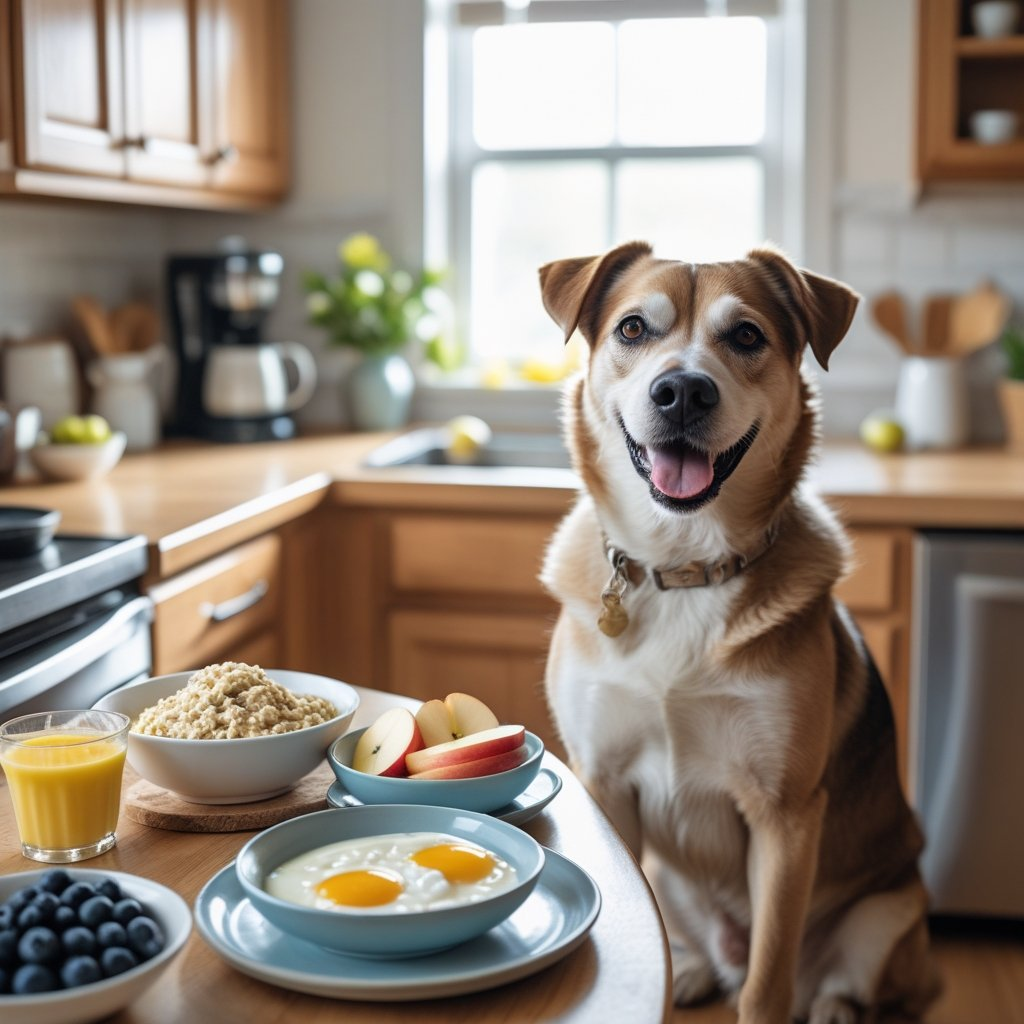
Many dog owners assume that “people food” is off‑limits, but that’s not always true. Some breakfast staples can safely share space in both the human and canine diet. When served plain and in moderation, these familiar foods can add variety, nutrients, and a little morning excitement to a dog’s routine.
Table of Contents
Quick Nutrition Snapshot
| Food | Key Nutrients | Dog‑Friendly Benefits | Serving Tip |
|---|---|---|---|
| Oatmeal | Fiber, B‑vitamins, iron | Aids digestion, supports heart health | Serve cooked and plain—no sugar or flavored packets |
| Eggs | Protein, amino acids, vitamin D | Builds muscle, promotes a shiny coat | Fully cook; avoid butter, salt, or oil |
| Peanut Butter | Healthy fats, protein, niacin | Boosts energy, great for training or enrichment | Must be xylitol‑free |
| Blueberries | Antioxidants, vitamin C, fiber | Supports brain and immune health | Serve fresh or frozen |
| Whole‑Grain Toast* | Complex carbs, fiber | Provides quick energy (in small portions) | Offer plain or with a light smear of peanut butter |
| Plain Yogurt | Calcium, probiotics | Aids gut health, supports bones | Use unsweetened, low‑fat yogurt |
| Apples | Vitamin C, fiber | Freshens breath, supports immunity | Remove seeds and core before serving |
*Note: Toast is safe for most dogs but not essential to their diet—see section below.
1. Oatmeal
Oatmeal is one of the most dog‑friendly human breakfasts around. It’s gentle on the stomach, naturally gluten‑free (when made from pure oats), and a great source of soluble fiber.
Why it’s good:
- Helps regulate digestion and bowel movements
- Supports heart and gut health through beta‑glucan fiber
- Provides slow‑release energy for active dogs
Science says:
Beta‑glucan, a fiber found in oats, has been shown to improve gut microbiota and cholesterol balance in both humans and animals.
Serving ideas:
- Mix a spoonful of cooked, plain oats into your dog’s regular kibble
- Chill leftover oatmeal and roll it into bite‑sized training treats
- Skip the instant or flavored packets—those often contain sugar, salt, or artificial flavorings
2. Eggs
Eggs are the breakfast MVP for dogs and humans alike. They’re a complete protein source, packed with amino acids, vitamins, and healthy fats.
Nutritional highlights:
- Supports muscle repair and coat health
- Provides vitamin D, B12, and selenium
- Easy to digest and naturally appealing to dogs
How to serve:
- Scrambled or boiled, fully cooked
- No butter, oil, or salt
- Mix with a few blueberries or a spoonful of plain yogurt for a balanced bowl
Did you know?
Raw eggs can carry bacteria like Salmonella, so always cook them thoroughly before serving.
3. Peanut Butter
Few things make dogs happier than peanut butter—it’s tasty, filling, and versatile.
Benefits:
- Excellent source of protein and healthy fats
- Great for hiding pills or rewarding good behavior
- Keeps dogs occupied when spread inside a chew toy
Cautions:
- Always check for xylitol, a sweetener that’s toxic to dogs
- Choose natural or unsalted varieties when possible
Serving ideas:
- Spread a thin layer inside a Kong toy and freeze it for a long‑lasting snack
- Add a small dab on toast or a slice of apple for a “dog‑friendly PB sandwich”
4. Blueberries
Blueberries deserve their “superfood” reputation—especially for dogs. They’re low in calories, high in antioxidants, and easy to serve.
Why they’re great:
- Packed with vitamin C and fiber
- Antioxidants help fight inflammation and support brain health
- Perfect bite‑sized treats for training
Science says:
Research from Tufts University found that blueberry antioxidants may improve cognitive function in aging dogs.
Serving ideas:
- Mix a few into your dog’s breakfast bowl
- Freeze them for a crunchy, refreshing treat on hot days
5. Whole‑Grain Toast (With a Caution)
Plain toast made from whole‑grain bread isn’t harmful for most dogs—but it’s not particularly nutritious either. Think of it as an occasional extra, not a dietary staple.
Pros:
- Provides quick energy from complex carbohydrates
- Can serve as a vehicle for peanut butter or egg
Cons:
- Some dogs are sensitive to gluten or wheat
- Bread adds calories without much nutritional value
- Never serve bread containing raisins, nuts, seeds, or artificial sweeteners
Serving ideas:
- Offer a small corner of toast plain, or with a thin smear of peanut butter
- Skip entirely if your dog has allergies, yeast issues, or weight concerns
Bottom line:
Toast is safe but unnecessary—it’s fine as a rare treat, not a routine breakfast item.
6. Plain Yogurt
Plain, unsweetened yogurt is a simple way to add probiotics and calcium to a dog’s diet.
Benefits:
- Supports digestive health and a balanced gut microbiome
- Provides calcium and protein for bone and muscle strength
- Can soothe mild stomach upset
Tips:
- Avoid flavored or sweetened yogurts—dogs don’t need added sugar
- If your dog is lactose‑intolerant, try lactose‑free or goat‑milk yogurt
Serving ideas:
- Mix a spoonful into dry food for texture and flavor
- Combine with fruit like blueberries for a probiotic “dog parfait”
7. Apples
Apples are crisp, refreshing, and naturally sweet—an easy way to sneak in vitamins and fiber.
Why they’re good:
- Contain vitamin C, potassium, and antioxidants
- Help freshen breath and clean teeth naturally
- Low in calories, high in crunch
Safety notes:
- Always remove the core and seeds (they contain trace cyanide compounds)
- Slice thinly or dice into small cubes for easy chewing
Serving ideas:
- Mix apple slices with yogurt or oats for a breakfast blend
- Freeze apple chunks for a healthy, crunchy snack
A Note on Safety
When introducing new foods:
- Start with small portions (1–2 teaspoons for small dogs, 1–2 tablespoons for large dogs)
- Introduce one new food at a time
- Watch for signs of allergies or digestive upset (itching, vomiting, loose stool)
- Consult your veterinarian if you’re unsure about specific foods
For a wholesome, dog‑friendly version of a human breakfast, try combining:
- A few spoonfuls of plain oatmeal
- One scrambled egg
- A small handful of blueberries
- A dab of peanut butter
Mix and serve warm. It’s a balanced, protein‑rich meal that dogs love—and it smells good enough that owners might be tempted to make a version for themselves.
Foods to Skip at Breakfast
Not every breakfast food is safe for dogs. Some common human favorites can cause digestive upset—or worse. Here’s what to keep off the menu:
1. Bacon and Sausage
- High in fat and salt, which can irritate a dog’s pancreas and lead to pancreatitis.
- Processed meats often contain preservatives and nitrates that aren’t dog‑friendly.
2. Syrups, Jams, and Honey
- Too much sugar can contribute to obesity and dental issues.
- Artificial sweeteners like xylitol are toxic, even in small amounts.
3. Coffee and Tea
- Caffeine is dangerous for dogs and can cause rapid heart rate, tremors, and restlessness.
- Even a few licks of spilled coffee can be harmful to small breeds.
4. Chocolate (in any form)
- Contains theobromine and caffeine, both toxic to dogs.
- Dark chocolate and cocoa powder are especially dangerous.
5. Grapes and Raisins
- Even small amounts can cause kidney failure in dogs.
- Always check baked goods and cereals for hidden raisins.
6. Buttered or Sugary Pastries
- Croissants, muffins, pancakes, and waffles are full of fat, sugar, and sometimes chocolate or raisins.
- Dogs don’t need the carbs or calories—and their stomachs won’t thank you.
7. Avocado Toast
- While small amounts of avocado flesh are usually safe, the pit, skin, and leaves contain persin, which can be toxic.
- Best to skip this trendy breakfast altogether.
The Takeaway
Dogs don’t need elaborate recipes or store‑bought “dog breakfasts” to eat well. Many of the same whole foods humans enjoy—like eggs, oats, fruit, and yogurt—can safely support canine health. The key is simplicity: no sugar, no salt, no seasoning.
A shared breakfast can be more than a meal; it’s a small daily ritual that strengthens the bond between human and dog—one bite at a time.

My name is Danny Jackson and I’m the CEO and Chief Editor behind Petloverguy.com. After spending a decade working with vets and private clients as an animal behavioral and nutritional specialist I co-founded Pet Lover Guy to help other pet parents learn how to interact with, and make the most of the time that they spend with their adopted and rescued best pet friends.
Working with Ella, our chihuahua rescue, we seek to help all dog and cat lovers have the happiest life possible.


