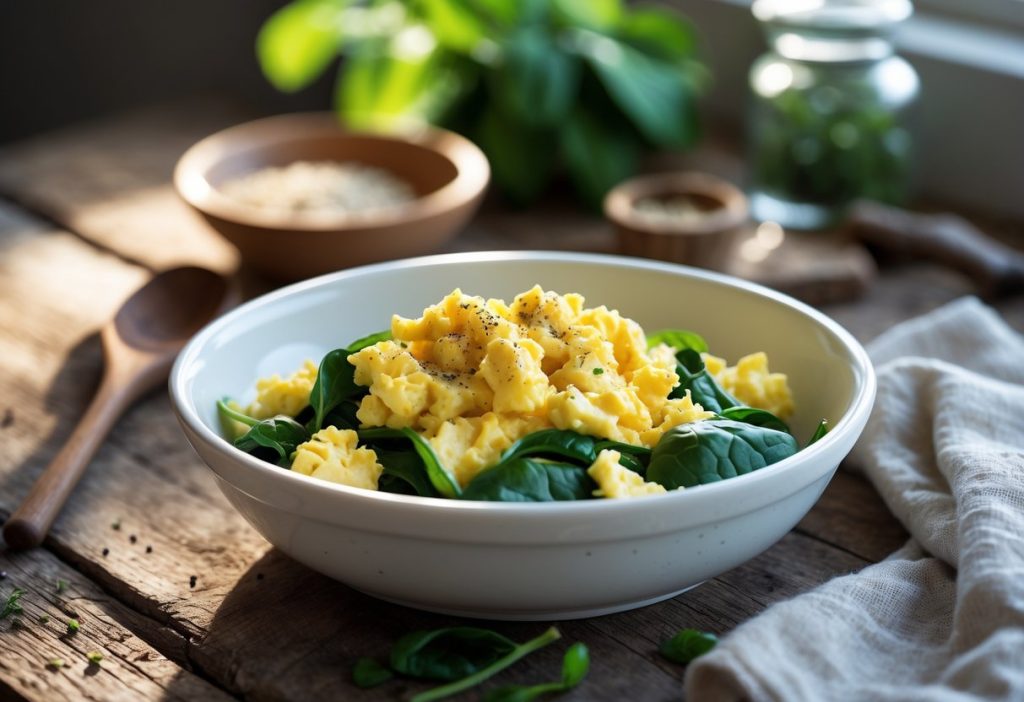
Does your dog give you those sad puppy eyes when you’re scrambling eggs for breakfast? This simple egg and spinach recipe takes just minutes to make and gives active dogs the protein boost they need to fuel their daily adventures.
This homemade scramble provides high-quality protein and iron that supports muscle development and energy levels in dogs of all sizes. Many pet parents struggle to find quick, healthy meal options that don’t break the bank or require a culinary degree to prepare.
This guide covers everything from the basic recipe to feeding portions for different dog breeds. You’ll also learn storage tips, batch cooking tricks, and how to switch up ingredients based on what’s in your fridge.
Table of Contents
Homemade Dog Food Disclaimer
This recipe is not a complete meal for dogs. It’s more like a tasty snack or meal topper. Think of it as the cherry on top of your pup’s regular diet.
Dogs need balanced nutrition just like humans do. They can’t live on scrambled eggs alone, no matter how much they beg with those puppy eyes.
Always check with a veterinarian before making big changes to a dog’s diet. Vets know best when it comes to furry tummies.
Some dogs have food allergies or health issues. What works for one dog might not work for another. Every pup is different.
This scramble should only make up a small part of a dog’s daily food intake.
Some dogs are lactose intolerant. If butter or cheese upsets their stomach, skip those ingredients.
Monitor dogs when trying new foods. Watch for signs like:
- Upset stomach
- Loose stools
- Vomiting
- Loss of appetite
When in doubt, stick to regular dog food. It’s specially made to keep dogs healthy and happy.
This recipe is meant for occasional treats, meal toppers, or less than 50% of their daily meals. It’s not a replacement for proper dog nutrition.
Quick Recipe
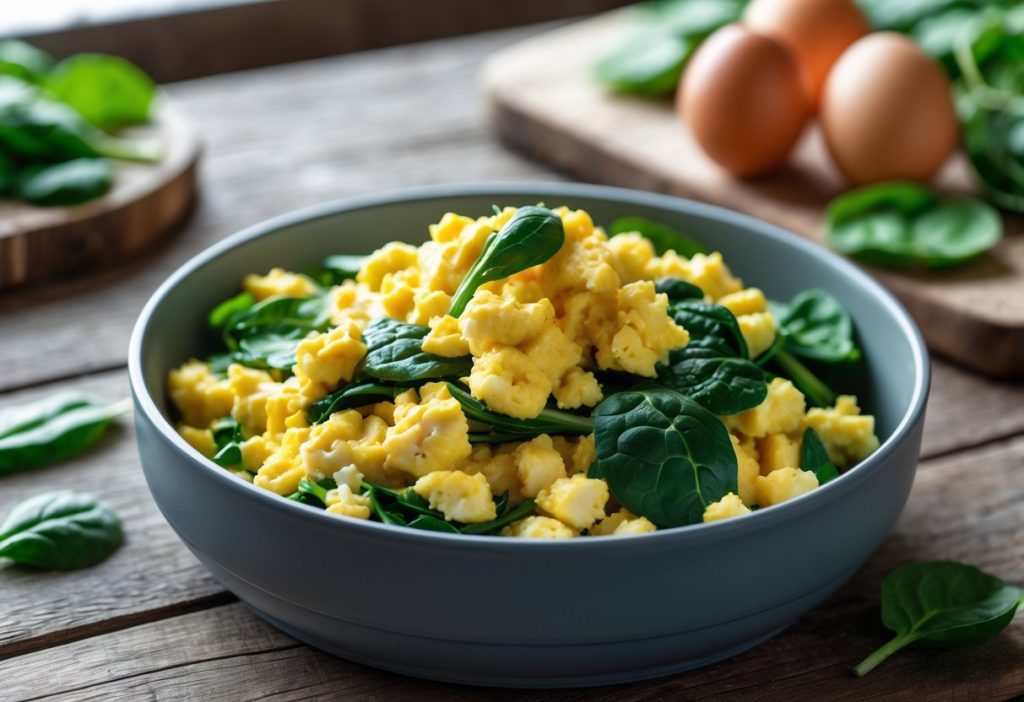
This simple scramble takes just minutes to prepare and uses ingredients most people already have at home. The cooking process involves basic stovetop techniques that even beginners can master.
Ingredients
Dog owners need just a few basic items to whip up this nutritious meal. Most of these ingredients are probably hiding in the kitchen right now.
Fresh Ingredients:
- 2 large eggs
- 1 cup fresh spinach leaves
- 1 tablespoon olive oil or coconut oil
Optional Add-ins:
- 1 tablespoon plain Greek yogurt
- Pinch of turmeric for color
The eggs provide the main protein punch. Fresh spinach works better than frozen because it doesn’t make the scramble watery.
Oil helps prevent sticking and adds healthy fats. Greek yogurt makes the texture creamier but isn’t required.
Steps
This recipe moves fast once the pan heats up. Having everything ready before starting prevents scrambled chaos.
Prep Work:
- Crack eggs into a bowl and whisk them
- Wash spinach and remove thick stems
- Heat oil in a non-stick pan over medium heat
Cooking Process: 4. Add spinach to the warm pan first 5. Cook spinach for 30 seconds until it wilts 6. Pour in beaten eggs 7. Stir gently with a spatula as eggs cook 8. Remove from heat when eggs look almost set 9. Let residual heat finish cooking for 30 seconds
The whole process takes about 3 minutes. Dogs don’t judge presentation, so messy scrambles work perfectly fine.
Benefits Of This Recipe
This scramble packs serious nutritional punch while keeping costs low. Dogs get high-quality protein and essential vitamins that support their active lifestyle.
Table – Cost & Calories Per Cup
| Ingredient | Cost Per Cup | Calories Per Cup |
|---|---|---|
| Eggs (2 large) | $0.50 | 140 |
| Fresh Spinach | $0.75 | 7 |
| Olive Oil (1 tsp) | $0.15 | 40 |
| Total | $1.40 | 187 |
This recipe costs less than most commercial dog treats. Pet owners spend roughly $1.40 per cup compared to $3-4 for premium wet food.
The calorie count works perfectly for active dogs. A 50-pound dog needs about 1,200 calories daily, so one cup provides 15% of their energy needs.
Health Advantages
Eggs deliver complete protein with all essential amino acids dogs need. Two eggs provide 12 grams of protein that builds strong muscles.
Spinach brings iron, folate, and vitamins A, C, and K to the bowl. These nutrients boost immune function and keep coats shiny.
The combination supports dogs who run, hike, or play fetch regularly. Protein repairs muscle tissue after exercise while vitamins aid recovery.
This homemade meal beats processed kibble for ingredient quality. Dogs get fresh, whole foods without mysterious preservatives or fillers that sound like chemistry experiments.
Feeding Table For Different Sized Dogs & Breeds (2 Meals A Day)
Your pup’s stomach isn’t a bottomless pit, even if they act like it. The right amount of egg and spinach scramble depends on their size and how much they bounce around.
Small dogs under 25 pounds need about 1/4 to 1/2 cup per meal. Think of tiny terriers who think they’re giants.
| Dog Size | Weight Range | Serving Size Per Meal |
|---|---|---|
| Small | Under 25 lbs | 1/4 to 1/2 cup |
| Medium | 25-60 lbs | 1/2 to 1 cup |
| Large | 60-90 lbs | 1 to 1.5 cups |
| Extra Large | Over 90 lbs | 1.5 to 2 cups |
Medium dogs between 25-60 pounds get 1/2 to 1 cup each meal. These dogs usually have the perfect balance of appetite and manners.
Large pups weighing 60-90 pounds need 1 to 1.5 cups per serving. They’re big enough to counter surf but still polite enough to wait for dinner.
Extra large dogs over 90 pounds get 1.5 to 2 cups each time. These gentle giants could probably eat more but shouldn’t.
Active dogs might need slightly more food than couch potatoes. Working breeds burn more calories than lap dogs who nap all day.
Split the daily amount into two meals. Morning and evening works best for most dogs and their humans.
Variations
This scramble adapts to fit dogs with different needs, from chunky pups trying to slim down to senior dogs with creaky joints. Simple ingredient swaps and portion adjustments make this recipe work for nearly every furry food critic.
Weight Loss
Overweight dogs need fewer calories but still deserve tasty meals. Use egg whites instead of whole eggs to cut calories by about 50 per egg.
Add extra spinach to bulk up the meal without adding many calories. Spinach has only 7 calories per cup but fills up hungry bellies.
Low-Calorie Additions:
- Zucchini (chopped fine)
- Green beans (steamed and diced)
- Carrots (grated)
Cook with cooking spray instead of oil or butter. This saves about 40 calories per teaspoon while keeping the eggs from sticking.
Serve smaller portions more often throughout the day. Three small meals work better than one big meal for weight loss.
Puppies
Growing puppies need extra protein and fat for their developing bodies. Use whole eggs plus one extra egg yolk for every two eggs in the recipe.
The extra yolk provides healthy fats that help brain development. Puppies also need more calories per pound than adult dogs.
Puppy-Friendly Additions:
- Small pieces of cooked chicken
- A sprinkle of cheese
- Cooked sweet potato (mashed)
Chop all ingredients extra small so little mouths can handle them easily. Puppies have trouble chewing large pieces.
Serve at room temperature, not hot. Puppy mouths are more sensitive to heat than adult dog mouths.
Senior Dogs
Older dogs often have trouble chewing and digesting food. Scramble the eggs longer to make them softer and easier to eat.
Wilt the spinach completely until it’s very soft. Hard or crunchy vegetables can be difficult for senior dogs to manage.
Senior-Friendly Modifications:
- Cook eggs until very soft
- Add a little warm water to make it mushier
- Blend ingredients for dogs with few teeth
Consider adding supplements that support aging bodies. A tiny amount of fish oil helps with joint health and makes the meal more appealing.
Serve smaller portions since older dogs are usually less active and need fewer calories.
Common Allergies
Some dogs can’t eat eggs, which makes this recipe tricky. Try scrambled tofu instead of eggs for dogs with egg allergies.
Dogs allergic to spinach can have other leafy greens. Kale works well but needs longer cooking time to become soft enough.
Alternative Ingredients:
- Instead of eggs: Scrambled tofu or ground turkey
- Instead of spinach: Kale, lettuce, or green beans
- Safe cooking fats: Coconut oil (small amounts)
Always introduce new ingredients slowly. Give a tiny amount first to watch for allergic reactions like itching or upset stomach.
Check with a vet before switching ingredients for dogs with known food allergies.
Picky Eaters
Fussy dogs often refuse plain, healthy food. Add tiny amounts of smelly ingredients they love to make the scramble more appealing.
Picky Eater Tricks:
- Sprinkle of parmesan cheese
- Tiny pieces of cooked bacon
- A few drops of chicken broth
- Small amount of plain yogurt mixed in
Warm the food slightly before serving. The smell becomes stronger when food is warm, which attracts picky eaters.
Mix the scramble with a small amount of their regular food. This helps them accept the new flavors gradually.
Serve in their favorite bowl and eat at their usual meal times. Familiar routines help picky dogs try new foods.
Digestion
Dogs with sensitive stomachs need gentler versions of this recipe. Cook the eggs with less oil and avoid adding rich ingredients like cheese or bacon.
Steam the spinach separately before adding it to the eggs. This makes it easier to digest than raw or lightly cooked spinach.
Gentle Ingredients:
- Plain cooked rice (mixed in)
- Cooked pumpkin (not pie filling)
- Bone broth instead of oil for cooking
Serve smaller portions more frequently. Large meals can upset sensitive stomachs, but small amounts are usually fine.
Let the food cool completely before serving. Hot food can cause stomach upset in dogs with digestion issues.
Joints
Dogs with joint problems benefit from anti-inflammatory ingredients added to their scramble. A small amount of turmeric mixed into the eggs helps reduce inflammation.
Joint-Supporting Additions:
- Tiny amount of turmeric (1/8 teaspoon for medium dogs)
- Fish oil (follow package directions)
- Cooked sweet potato for antioxidants
Omega-3 fatty acids from fish oil help reduce joint inflammation. Mix it in after cooking so the heat doesn’t destroy the healthy fats.
Keep portions appropriate for the dog’s activity level. Extra weight puts more stress on painful joints.
Skin & Coat
Dogs with dull coats or skin problems need extra healthy fats in their diet. Add a small amount of fish oil or coconut oil to the finished scramble.
Skin & Coat Boosters:
- Fish oil (omega-3s)
- Coconut oil (small amounts)
- Extra egg yolks (biotin for coat health)
The protein in eggs already helps build healthy fur. Adding healthy fats makes coats shinier and skin less dry.
Avoid cooking oils high in omega-6 fats like corn oil. These can make skin problems worse over time.
Consistency matters more than large amounts. A little bit of healthy fat every day works better than lots of fat occasionally.
Seasonal Switches
Dogs get bored with the same meals just like humans do. Adding seasonal ingredients keeps their taste buds happy and excited.
Spring brings fresh peas and asparagus. Chop these into tiny pieces before mixing with eggs. Your pup will think they hit the jackpot.
Summer means zucchini and green beans are everywhere. Grate zucchini finely so it cooks fast. Dogs love the mild taste and crunchy texture.
Fall offers sweet potato and pumpkin. Steam these orange vegetables first, then mash them up. Mix small amounts into the scramble for extra vitamins.
Winter calls for heartier additions. Carrots and broccoli work great when chopped small. These veggies add color and crunch to boring scrambled eggs.
| Season | Best Veggies | Prep Method |
|---|---|---|
| Spring | Peas, asparagus | Chop tiny |
| Summer | Zucchini, green beans | Grate or slice thin |
| Fall | Sweet potato, pumpkin | Steam and mash |
| Winter | Carrots, broccoli | Chop small |
Always introduce new foods slowly. Some dogs have sensitive stomachs and need time to adjust. Start with one new veggie at a time.
Remember to avoid onions, garlic, and grapes. These foods can make dogs sick. Stick to dog-safe vegetables that won’t cause problems.
Fresh herbs like parsley also work well. Sprinkle tiny amounts on top for extra flavor. Your dog will feel like they’re eating at a fancy restaurant.
Storage Advice
Store leftover scramble in the fridge for up to three days. Your pup will give you the sad eyes when it’s gone, but safety first.
Use a sealed container to keep the eggs fresh. Nobody wants funky-smelling scramble taking over the fridge.
Freezing works too. Pop portions into ice cube trays for easy serving sizes. Dogs think frozen egg cubes are basically gourmet ice cream.
| Storage Method | Time Limit | Best For |
|---|---|---|
| Refrigerator | 3 days | Daily meals |
| Freezer | 1 month | Batch prep |
Let frozen portions thaw in the fridge overnight. Microwaving works but makes the eggs rubbery. Dogs notice these things.
Never leave cooked eggs out for more than two hours. Room temperature turns eggs into a science experiment nobody wants to feed their pet.
Small containers work better than big ones. Dogs can’t exactly ask for leftovers, so portion control helps prevent waste.
Label containers with dates. Three-week-old eggs might look fine but smell like regret when opened.
Reheat gently on low heat with a splash of water. This keeps the scramble soft and tasty for picky eaters.
Batch Cooking Tips
Making egg and spinach scrambles for multiple dogs gets easier with batch cooking. Smart prep saves time and keeps pups happy.
Cook eggs in larger batches and store them in the fridge. They stay fresh for 3-4 days when stored properly.
Wash and chop spinach ahead of time. Store it in airtight containers so it’s ready to toss into the pan.
| Ingredient | Storage Time | Storage Method |
|---|---|---|
| Cooked eggs | 3-4 days | Refrigerator in sealed container |
| Fresh spinach | 5-7 days | Refrigerator in airtight container |
| Mixed scramble | 2-3 days | Refrigerator in portions |
Portion control becomes a breeze when owners divide scrambles into small containers. Each pup gets their perfect serving size without guesswork.
Freezing works too but changes the texture slightly. Frozen portions last up to one month and thaw quickly in the microwave.
Some dog parents cook Sunday meal prep sessions. They make enough scrambles for the whole week while their coffee brews.
Label containers with dates to avoid the mystery meal game. Nobody wants to guess if those eggs are from Tuesday or last Tuesday.
Reheating takes just 30 seconds in the microwave. Stir well and test the temperature before serving to avoid burning tiny tongues.
Transitioning Steps
Dogs can be picky eaters, just like toddlers who refuse vegetables. Start by mixing tiny amounts of the egg scramble with their regular food. This sneaky approach works better than going cold turkey.
Week 1: The Introduction Phase
- Mix 1 tablespoon of scramble with normal kibble
- Watch for any tummy troubles or dramatic food protests
- Increase to 2 tablespoons if the dog seems happy
Some dogs will gobble up anything that hits their bowl. Others will stare at the new food like it’s an alien invasion. Both reactions are normal.
Week 2: Building Confidence
- Increase scramble to 1/4 cup mixed with kibble
- Reduce regular food slightly
- Keep an eye on bathroom habits
Week 3: The Big Leap
- Try serving 1/2 cup of scramble as a complete meal
- Offer it alongside a small portion of regular food
- Let the dog choose what they want to eat first
If the dog turns their nose up at the scramble, don’t panic. Some pups need more time to accept new flavors. Keep trying every few days until they warm up to the idea.
The transition works best when owners stay patient and positive.

My name is Danny Jackson and I’m the CEO and Chief Editor behind Petloverguy.com. After spending a decade working with vets and private clients as an animal behavioral and nutritional specialist I co-founded Pet Lover Guy to help other pet parents learn how to interact with, and make the most of the time that they spend with their adopted and rescued best pet friends.
Working with Ella, our chihuahua rescue, we seek to help all dog and cat lovers have the happiest life possible.