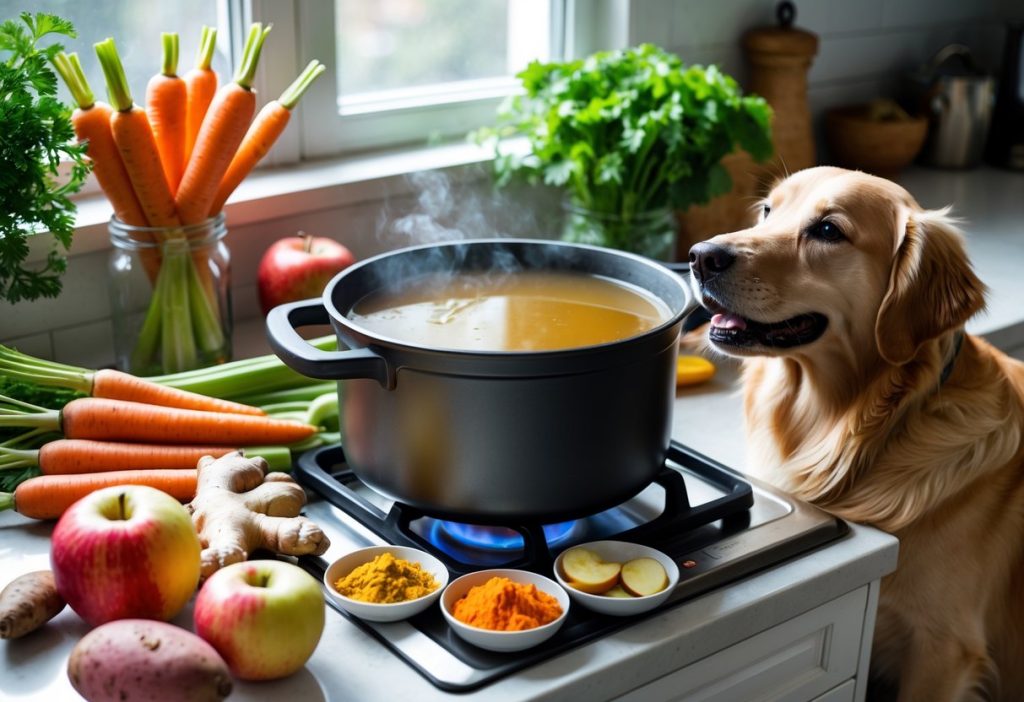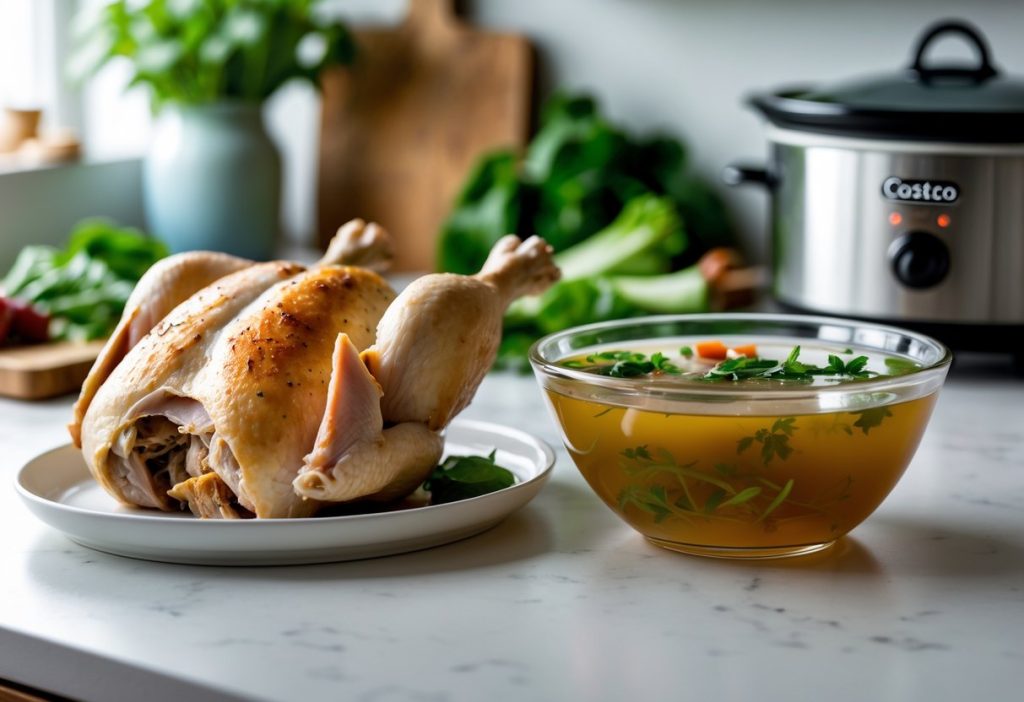
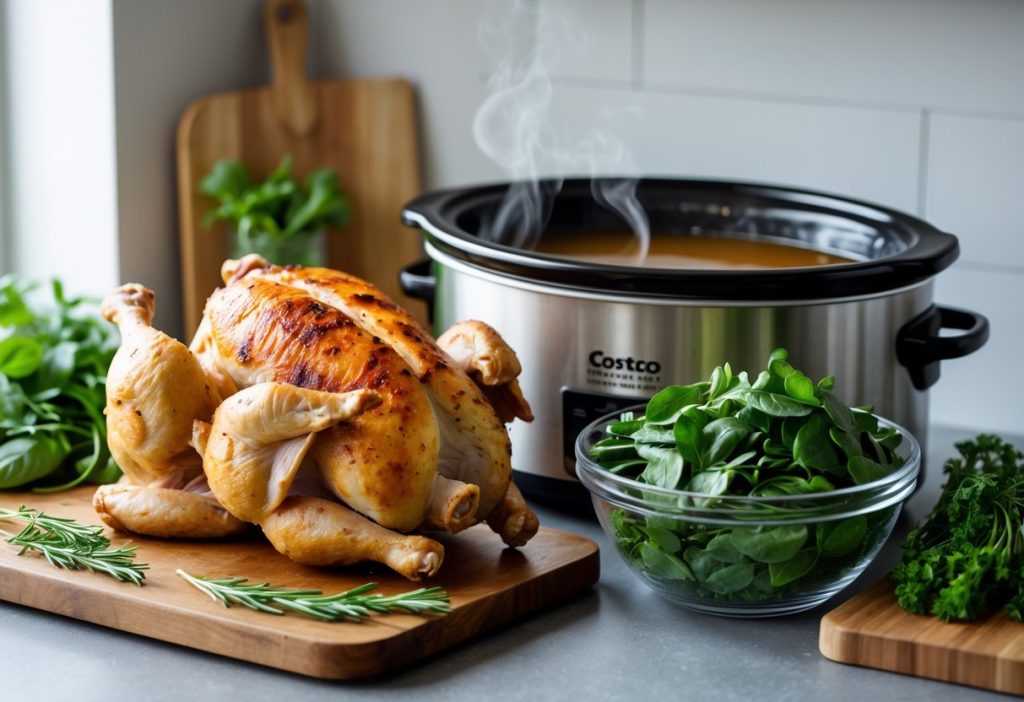
Most dog owners toss their Costco rotisserie chicken bones straight into the trash, but they’re actually sitting on a goldmine of nutrition for their furry friends. That leftover carcass can become liquid gold for dogs when combined with Costco’s Super Greens blend in a slow cooker.
This homemade broth supports joint health, digestion, and hydration at a fraction of the cost of fancy pet store supplements. Pet parents spend hundreds on joint formulas and special diets, but this simple recipe uses ingredients they probably already have in their kitchen and freezer.
This guide walks dog owners through creating a nutrient-packed broth that their pets will actually enjoy drinking. You’ll learn the exact recipe, feeding amounts for different dog sizes, storage tricks, and how to safely transition pups to this healthy addition to their meals.
Table of Contents
⚠️ Quick Disclaimer
This recipe is a supplement, not a full meal.
Always check with your vet before changing your dog’s diet—especially for puppies, seniors, or dogs with health issues.
Remove all bones before serving, let the broth cool, and store leftovers safely (5 days in the fridge or 3 months frozen).
Every dog is different, so start small and monitor how they react.
Quick Recipe
This bone broth uses leftover rotisserie chicken bones and Costco Super Greens to create a nutrient-packed supplement for dogs. The slow cooker does most of the work while owners binge-watch their favorite shows.
Ingredients
From the Rotisserie Chicken:
- 1 leftover chicken carcass (bones, skin, any meat scraps)
- Any leftover drippings from the container
From Costco:
- 2 cups Costco Super Greens mix (kale, chard, spinach — moderate amounts are fine for most dogs)
- 1 tablespoon apple cider vinegar
Pantry Items:
- 8–10 cups filtered water
- 1 teaspoon turmeric powder (optional)
The chicken carcass should still have some meat and skin attached — that’s where the flavor and nutrients hide. The apple cider vinegar helps draw minerals from the bones during cooking, and the greens add natural vitamins and fiber.
Steps
Prep Work (5 minutes): Break the chicken carcass into pieces that fit the slow cooker, rinse the greens, and toss everything in together.
Cooking Process: Set your slow cooker to LOW for 12–24 hours. The longer it cooks, the richer and more nutritious it becomes. Try not to peek too often—let the magic happen.
Finishing Touches: Once done, strain the broth through a fine mesh strainer, removing all bones and vegetable pieces. Let it cool fully before serving.
Store leftovers in the fridge for up to 5 days. If it gels when cold, that’s a great sign—it means it’s packed with collagen.
Benefits of This Recipe
This homemade broth costs pennies per cup while offering hydration and gentle nutritional support. Dogs love the flavor, and owners love the savings.
| Ingredient | Cost per Cup | Calories per Cup |
|---|---|---|
| Chicken carcass broth | $0.15 | 25 |
| Super Greens addition | $0.08 | 5 |
| Total | $0.23 | 30 |
Compared to store-bought bone broth at $3–4 per cup, this recipe saves over $15 per batch. It’s low-calorie, nutrient-dense, and perfect for dogs who need a little extra nourishment without extra weight gain.
Health Advantages
Bone broth provides gentle, natural support for your dog’s body. The collagen and gelatin from chicken bones help keep joints flexible, while the greens and fiber aid digestion. Warm broth also encourages hydration, especially for dogs who forget to drink enough water, and the gelatin helps them feel full longer—great news for food-motivated pups.
These benefits are based on general nutritional properties of the ingredients. Always consult your vet for personalized advice.
Feeding Table for Different Dog Sizes
| Dog Size | Weight Range | Broth Per Meal | Daily Total |
|---|---|---|---|
| Tiny | 5–15 lbs | 2–4 tbsp | 4–8 tbsp |
| Small | 16–30 lbs | ¼–½ cup | ½–1 cup |
| Medium | 31–60 lbs | ½–¾ cup | 1–1.5 cups |
| Large | 61–90 lbs | ¾–1 cup | 1.5–2 cups |
| Giant | 90+ lbs | 1–1.5 cups | 2–3 cups |
Start small and increase gradually. Serve at room temperature—not hot—to avoid burns.
Bulldogs and pugs might need a bit less, while active breeds like shepherds or retrievers can enjoy the full serving. Chihuahuas, of course, will still think they deserve a gallon.
Variations
Dogs have different needs, so here are easy tweaks for specific goals.
Weight Loss
For dogs watching their figure, remove visible fat and skin before cooking. Double the greens for extra fiber, and pour warm broth over kibble to make meals feel bigger without adding calories.
Puppies
Simmer longer (18–20 hours) to draw out more calcium, strain twice to remove every bone bit, and serve cooled. Start small—¼ cup for tiny breeds, ½ cup for larger puppies—and always check with your vet first.
Senior Dogs
Older pups benefit from a stronger broth. Add 2 tablespoons of apple cider vinegar and a 1-inch piece of ginger root for digestion. Use two carcasses for extra protein and serve at room temperature for comfort.
Common Allergies
If your dog can’t handle chicken, swap in turkey or duck bones. Sensitive to kale or spinach? Use chard or cabbage instead. Introduce new ingredients slowly and watch for itching or stomach upset.
| Common Allergy | Substitute |
|---|---|
| Chicken | Turkey or duck bones |
| Leafy greens | Carrots or sweet potato |
| All vegetables | Plain bone broth only |
Picky Eaters
Leave tiny bits of shredded chicken for texture and skip the garlic (it’s toxic to dogs!). Instead, boost aroma with a few drops of salmon oil or unsalted anchovy juice. Serve warm as gravy or freeze into tasty ice cubes for summer treats.
Digestion Support
Refrigerate overnight and skim the fat layer. Add 2 tablespoons of plain canned pumpkin per cup for extra fiber. Serve small, frequent portions at room temperature—perfect for sensitive tummies.
Joints
Simmer for 20–24 hours to maximize gelatin. Add ½ teaspoon turmeric powder per batch and mix in a capsule of fish oil before serving for omega-3 benefits. Warm broth works wonders on cold mornings.
Skin & Coat
Keep a little fat for shine, add a teaspoon of coconut oil per cup, and toss in a couple of split beef marrow bones for collagen. Serve at room temperature to preserve the healthy fats that make coats gleam.
Seasonal Switches
Each season brings new reasons to make broth.
| Season | Best Ingredients | Dog Benefits |
|---|---|---|
| Winter | Extra carcasses from parties | Warming comfort food |
| Spring | Fresh greens | Detox after holiday treats |
| Summer | Frozen broth cubes | Cool hydration boost |
| Fall | Root vegetables | Joint support for active dogs |
Freeze broth cubes for summer snacks, or serve warm in winter for cozy comfort. Spring’s fresh greens help dogs recover from indulgent holidays, and fall’s hearty veggies give them energy for longer walks.
Storage Advice
| Storage Method | Time Limit | Best Containers |
|---|---|---|
| Refrigerator | 5 days | Mason jars, plastic containers |
| Freezer | 3 months | Ice cube trays, freezer bags |
Keep broth cold to stay safe. It should gel when chilled—that’s normal. Always smell before serving; if it’s sour or off, toss it. Never leave broth out for more than two hours, and label containers with dates so you know what’s fresh.
Batch Cooking Tips
Making broth in bulk saves time and money.
Smart Shopping:
Buy rotisserie chickens on sale, stock up on Costco Super Greens, and freeze carcasses until ready.
Storage Solutions:
| Container Type | Best For | Storage Time |
|---|---|---|
| Ice cube trays | Small portions | 3 months |
| Mason jars | Daily servings | 5 days refrigerated |
| Freezer bags | Large batches | 6 months |
Time-Saving Hacks:
Prep veggies while the first batch cooks, use slow cooker liners for easy cleanup, and label everything clearly.
Pro Tip: Start the slow cooker before bed—you’ll wake up to a house that smells amazing and dogs waiting eagerly for breakfast.
Transitioning Steps
Introduce broth slowly so your dog’s stomach adjusts comfortably.
- Week 1: Mix 1 tablespoon of broth with regular food.
- Week 2: Increase to 2 tablespoons per meal.
- Week 3: Up to ¼ cup with meals for most dogs.
Good Signs: Shinier coat, more energy, and excitement at mealtime.
Red Flags: Vomiting, diarrhea lasting over 24 hours, or loss of appetite—pause and consult your vet.
Senior or sensitive dogs may need an extra week to adjust. Store leftover broth in the fridge for up to 5 days or freeze in single-serving cubes for easy use.
The goal is simple: make mealtime exciting, nutritious, and safe.

My name is Danny Jackson and I’m the CEO and Chief Editor behind Petloverguy.com. After spending a decade working with vets and private clients as an animal behavioral and nutritional specialist I co-founded Pet Lover Guy to help other pet parents learn how to interact with, and make the most of the time that they spend with their adopted and rescued best pet friends.
Working with Ella, our chihuahua rescue, we seek to help all dog and cat lovers have the happiest life possible.