
Table of Contents
- Why Homemade Treats?
- Quick Recipe: Chicken & Apple Oven-Baked Treats
- Cost & Calorie Comparison (Per Treat)
- How Many Treats Per Day?
- Health Benefits
- Freeze-Dried Apple Treats (Video Section)
- Variations for Every Dog
- Seasonal Swaps
- Breed Personality vs. Treat Preference
- Storage Tips
- Batch Cooking Tips
- Transitioning to Homemade Treats
- Final Thoughts
Disclaimer
These chicken and apple treats are intended as snacks and training rewards only. They should not replace a balanced dog food diet.
Always consult your veterinarian before introducing new foods, especially if your dog has allergies, sensitivities, or medical conditions.
Keep treats under 10% of your dog’s daily calorie intake and always provide fresh water.
Why Homemade Treats?
Most dog owners have watched their furry friend reject expensive store-bought treats faster than a cat avoiding a bath. The good news? Homemade dog treats can be both delicious and affordable.
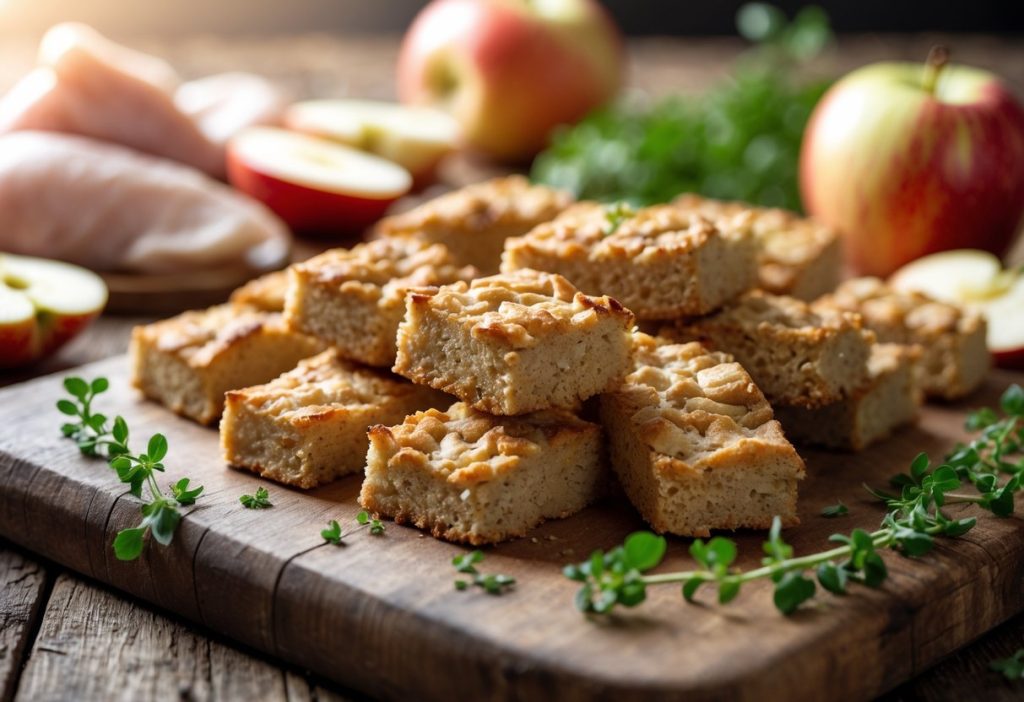
These chicken and apple oven-baked bites combine real protein with natural sweetness for a crispy texture dogs adore. They’re perfect for training sessions or everyday rewards that pet parents can feel good about serving.
This guide walks you through the process—from ingredients and baking tips to storage, safety, and even breed-based flavor preferences. You’ll also learn how to modify the recipe for puppies, seniors, picky eaters, and more. Whether you’re a first-time baker or a seasoned dog-mom chef, this recipe is designed to be easy, flexible, and fun.
Quick Recipe: Chicken & Apple Oven-Baked Treats
(Approx. 45 minutes total time)
Homemade dog treats don’t have to be complicated. This simple recipe uses pantry staples and fresh ingredients you likely already have on hand. The process is straightforward enough for beginners but produces treats that look and smell professional.
Dry Ingredients:
- 2 cups whole wheat flour
- ½ cup rolled oats
- 1 teaspoon baking powder (safe in small amounts; avoid overuse due to sodium)
Wet Ingredients:
- 1 cup cooked chicken, shredded or finely diced
- 1 medium apple, peeled, cored, and finely chopped (remove all seeds and core pieces)
- ⅓ cup water (add more if needed)
Instructions:
- Preheat oven to 350°F (175°C).
- Line a baking sheet with parchment paper.
- Mix dry ingredients in a large bowl.
- Add chicken and apple. Slowly pour in water while stirring.
- Mix until a soft, slightly sticky dough forms.
- Roll dough to ¼ inch thick on a floured surface.
- Cut into small squares or use cookie cutters.
- Bake for 25–30 minutes until golden brown and crisp.
- Cool completely before serving.
Safety Note: Treats should sound hollow when tapped. Let them cool fully to prevent burnt tongues.
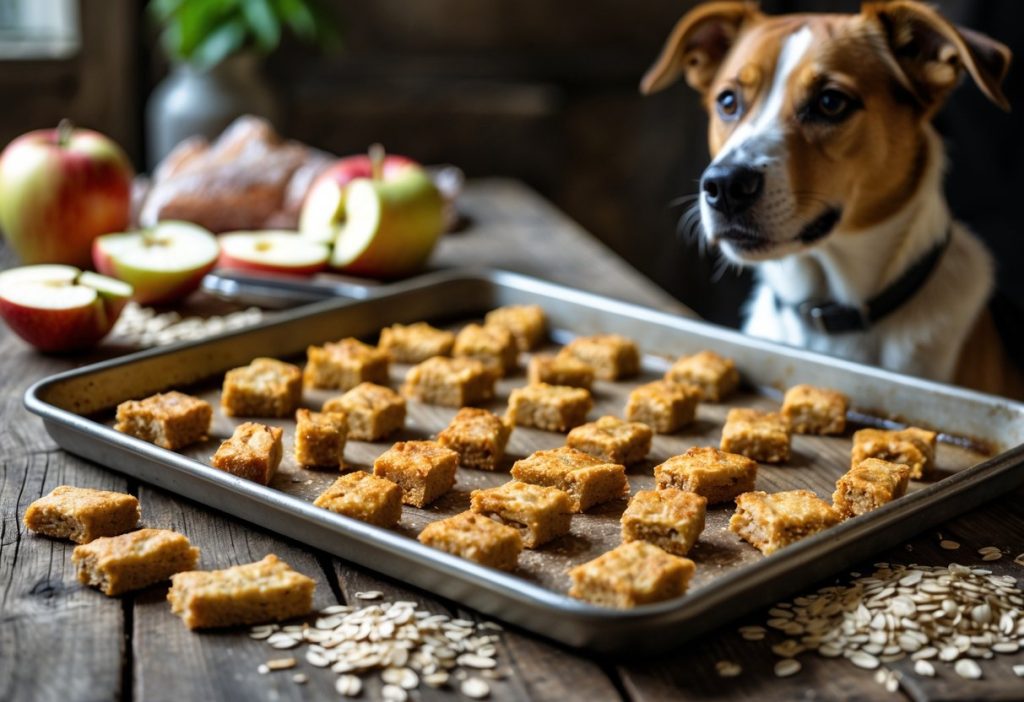
This recipe makes about 2–3 dozen treats, depending on the size of your cookie cutter. The smell of baked chicken and apples will fill your kitchen — and your dog will probably start circling the oven long before the timer goes off.
Cost & Calorie Comparison (Per Treat)
| Treat Type | Approx. Cost Per Treat | Calories Per Treat |
|---|---|---|
| Homemade Chicken & Apple Treats | $0.03 | 18–20 |
| Premium Store-Bought Treats | $0.20 | 25–30 |
| Average Commercial Treats | $0.10 | 22–25 |
Homemade treats cost a fraction of store-bought options — about three cents per treat compared to twenty cents or more for premium brands. That means you can reward your dog multiple times a day without guilt or blowing your budget.
Calorie-wise, each treat delivers about 20 calories, making them easy to factor into your dog’s daily intake. For comparison, a medium dog (40–50 lbs) typically burns around 700–900 calories per day, so a few treats won’t derail their diet when given in moderation.
Beyond the savings, the biggest advantage is control — you know exactly what’s in each bite. No fillers, no preservatives, and no artificial colors. Just wholesome ingredients that smell like real food, because they are.
How Many Treats Per Day?
| Dog Size | Weight Range | Recommended Treats Per Day | Notes |
|---|---|---|---|
| Toy / Small | 5–25 lbs | 2–4 treats | Ideal for training or light snacks |
| Medium | 26–60 lbs | 4–6 treats | Great balance between reward and moderation |
| Large | 61–90 lbs | 6–8 treats | Can handle slightly higher intake |
| Extra Large | 91+ lbs | 8–10 treats | Adjust for activity level and age |
These numbers assume each treat is about 18–20 calories and that treats make up no more than 10% of your dog’s total daily calories.
Puppies: Start with 1–2 small treats per day and increase gradually. Their digestive systems are still adjusting to new foods.
Senior Dogs: Limit to 2–3 per day unless they’re very active. Older dogs need fewer calories overall.
If your dog is training intensively, you can break each treat into halves or quarters to stretch them out. Dogs don’t care about treat size — they care about frequency and enthusiasm!
Health Benefits
Homemade treats aren’t just about saving money — they can actually contribute to better health when made thoughtfully.
- Chicken: High-quality protein for muscle maintenance and energy. Dogs thrive on real meat, and chicken provides essential amino acids without unnecessary fat.
- Apple: Natural fiber for digestion and vitamins for immune health. Apples also contain antioxidants that support cellular repair and overall wellness.
- Oven-baked texture: Crunchy satisfaction without preservatives or artificial additives. The gentle baking process locks in flavor while keeping the texture satisfying for dogs who love to chew.
These treats freeze beautifully and retain their crunch even after thawing, making them ideal for long-term storage or batch prep.
Freeze-Dried Apple Treats (Video Section)
🎥 Watch: Freeze-Dried Apple Treats for Dogs
If your dog loves fruit, freeze-dried apple treats are the ultimate lightweight, crunchy snack. This video walks through how to make single-ingredient apple treats using a home dehydrator or freeze-dryer.
Freeze-drying removes moisture while preserving nutrients, making these treats shelf-stable for months. You can use them as a standalone snack or as a topper for kibble.
Why Dogs Love Them:
- 100% apple—no fillers, no sugar, no preservatives.
- Naturally sweet and low in calories.
- Perfect for dogs with sensitive stomachs or grain allergies.
Pro Tip:
Use these as “training toppers.” Mix one or two freeze-dried apple pieces with chicken-based treats for variety and texture contrast. Dogs respond even better when training rewards aren’t repetitive — a mix of soft and crunchy keeps them guessing and motivated.
Variations for Every Dog
Dogs are as unique as their humans. The following variations help tailor these treats to your dog’s lifestyle, age, and taste buds.
Weight Management
For dogs watching their waistlines, small adjustments make a big difference.
- Replace half the chicken with lean white fish.
- Add 1 tbsp plain pumpkin puree for fiber.
- Bake thinner for a crispier, lower-calorie reward.
These tweaks keep treats satisfying but lighter, helping maintain a healthy weight without sacrificing flavor.
Puppies
Growing pups need softer textures and extra nutrients.
- Steam chicken until soft and shred finely.
- Cook apples until mushy.
- Add one beaten egg for protein and bake at 275°F for softer treats.
The result? Gentle, chewy snacks that are perfect for training and teething.
Senior Dogs
Older dogs benefit from easy-to-chew, moisture-rich treats.
- Grind chicken into a paste and grate apples finely.
- Add warm bone broth for moisture.
- Bake for less time for a softer texture.
A little extra care goes a long way in keeping senior pups excited about snack time.
Common Allergies
Allergies are common, but that doesn’t mean your dog has to miss out.
- Replace chicken with turkey or duck.
- Substitute apples with pears or sweet potatoes.
- For grain-free treats, use coconut flour (½ the amount).
Always introduce new proteins slowly and watch for reactions.
Picky Eaters
Some dogs are culinary critics.
- Add 1 tbsp plain Greek yogurt or sprinkle freeze-dried liver powder before baking.
- Serve slightly warm to enhance aroma.
The smell of warm chicken and apple is nearly irresistible—especially when it’s fresh from the oven.
Digestion Support
Sensitive tummies need gentle ingredients.
- Remove apple skins and cook fruit until soft.
- Add a dog-safe probiotic after cooling.
- Bake fully dry to prevent fermentation.
These adjustments promote gut health while keeping the treats tasty.
Joint Health
For older or large-breed dogs, joint-friendly ingredients help keep them moving comfortably.
- Add ¼ tsp turmeric for anti-inflammatory benefits.
- Substitute part of the chicken with canned salmon or sardines.
- Mix in glucosamine powder (vet-approved).
Skin & Coat
Shiny coats start from the inside out.
- Add 1 tbsp coconut oil for shine.
- Use novel proteins like venison to reduce sensitivity.
- Optional: Add biotin powder (vet-approved).
Seasonal Swaps
Dogs might not care about “seasonal menus,” but they’ll definitely notice the change in flavor and texture.
- Spring: Swap apples for strawberries or blueberries for a burst of freshness.
- Summer: Freeze baked treats for cooling crunch.
- Fall: Use pumpkin, sweet potato, or cranberries (unsweetened only) for cozy autumn flavors.
- Winter: Add a pinch of cinnamon for warmth and aroma. (Too much can irritate digestion.)
Rotating ingredients keeps your dog excited and prevents boredom. It’s also a great way to use up seasonal produce before it spoils.
Breed Personality vs. Treat Preference
Every dog has a personality—and taste buds to match! Here’s a playful look at how different breeds might react to these treats:
| Breed | Personality | Treat Preference |
|---|---|---|
| Labrador Retriever | Food-obsessed, eager to please | Big crunchy treats—they’ll eat anything! |
| Chihuahua | Bold but tiny | Mini bite-sized pieces with strong aroma |
| Border Collie | Focused, energetic | High-protein, chicken-heavy versions |
| French Bulldog | Sensitive stomach, playful | Freeze-dried apple or yogurt-infused treats |
| Golden Retriever | Sweet, social | Pumpkin or sweet potato variations |
| German Shepherd | Athletic, loyal | Joint-support version with turmeric & fish |
| Poodle | Intelligent, selective | Soft treats with Greek yogurt flavor boost |
Of course, every dog is unique. These generalizations are meant for fun—but it’s amazing how often they ring true! Try offering a few variations and see which one makes your dog do their happy dance.
Storage Tips
| Storage Type | Duration | Notes |
|---|---|---|
| Room Temp | 2–3 days | Airtight container, away from heat and sunlight |
| Refrigerator | Up to 1 week | Keeps treats crisp and fresh |
| Freezer | Up to 3 months | Store in dated bags; serve frozen for a crunchy surprise |
Proper storage keeps your hard work from going to waste. Always let treats cool completely before sealing them—residual warmth creates condensation, which leads to sogginess or mold.
Dogs often love frozen treats—they’re like doggy popsicles! On hot days, frozen snacks can even help cool your pup down after a walk.
Batch Cooking Tips
If you have multiple dogs or just love efficiency, batch baking is your best friend.
- Double or triple the recipe for convenience.
- Cool treats completely before storing.
- Freeze in single layers before transferring to bags.
- Label containers with dates.
- Mix treat sizes for multi-dog households.
Batch cooking means fewer baking sessions and more playtime. You can even dedicate one weekend a month to “treat prep day” — your dog will quickly learn to recognize the smell of baking day and hover nearby like a tiny sous chef.
Transitioning to Homemade Treats
Some dogs act skeptical about new snacks. Transition gradually:
- Week 1: 25% new treats, 75% old
- Week 2: 50/50 mix
- Week 3: 75% new, 25% old
- Week 4: 100% new
If your dog hesitates, warm treats slightly to boost aroma. Use them during training for positive associations. Some dogs are cautious, others are adventurous — patience always pays off.
By week four, most dogs will be fully converted to your homemade creations and may even start ignoring their old store-bought snacks altogether.
Final Thoughts
Homemade chicken and apple dog treats are simple, affordable, and tail-waggingly delicious. With endless variations, seasonal swaps, and breed-based fun, these recipes make treat time healthier and more personal.
When in doubt, always check with your vet—then get baking and make your dog’s day!

My name is Danny Jackson and I’m the CEO and Chief Editor behind Petloverguy.com. After spending a decade working with vets and private clients as an animal behavioral and nutritional specialist I co-founded Pet Lover Guy to help other pet parents learn how to interact with, and make the most of the time that they spend with their adopted and rescued best pet friends.
Working with Ella, our chihuahua rescue, we seek to help all dog and cat lovers have the happiest life possible.


