Senior dogs often feel like they’re running on empty, even after their regular meals. Their aging bodies need extra support for joints, energy, and digestion that typical kibble just can’t provide.
This raw salmon and oats recipe gives older dogs the omega-rich nutrients they need to feel more energetic and comfortable. The combination helps reduce joint stiffness while being gentle on sensitive stomachs that many senior pups develop.
This guide walks dog owners through making this simple recipe at home. It covers proper portions for different dog sizes, storage tips, and how to safely switch their furry friend to this nutritious meal.
Homemade Dog Food Disclaimer
This recipe is not veterinary advice. It’s just a human trying to make their furry friend happy with some fishy goodness.
Every dog is different. What makes one pup bounce around like a kangaroo might make another dog give you the stink eye.
Always talk to a vet first. They went to school for this stuff. Dog owners just watched YouTube videos and read blogs.
Some dogs have allergies or health issues. Raw salmon might not be their best friend. Neither might oats, for that matter.
Important things to remember:
- Start with small amounts
- Watch for upset tummies
- Keep ingredients fresh
- Store food safely
Raw food comes with risks. Bacteria can make dogs sick just like humans. Handle everything with clean hands and clean surfaces.
Senior dogs need special care. Their bodies work differently than younger dogs. What helped them at age two might not help at age ten.
This recipe should not replace regular dog food completely. Think of it as a special treat or supplement. Dogs need balanced nutrition from proper dog food too.
If a dog gets sick, stops eating, or acts weird after trying this recipe, call the vet right away. Don’t wait around hoping it gets better.
The author is not responsible if dogs decide they don’t like salmon. Some dogs are just picky eaters with expensive taste.
Quick Recipe
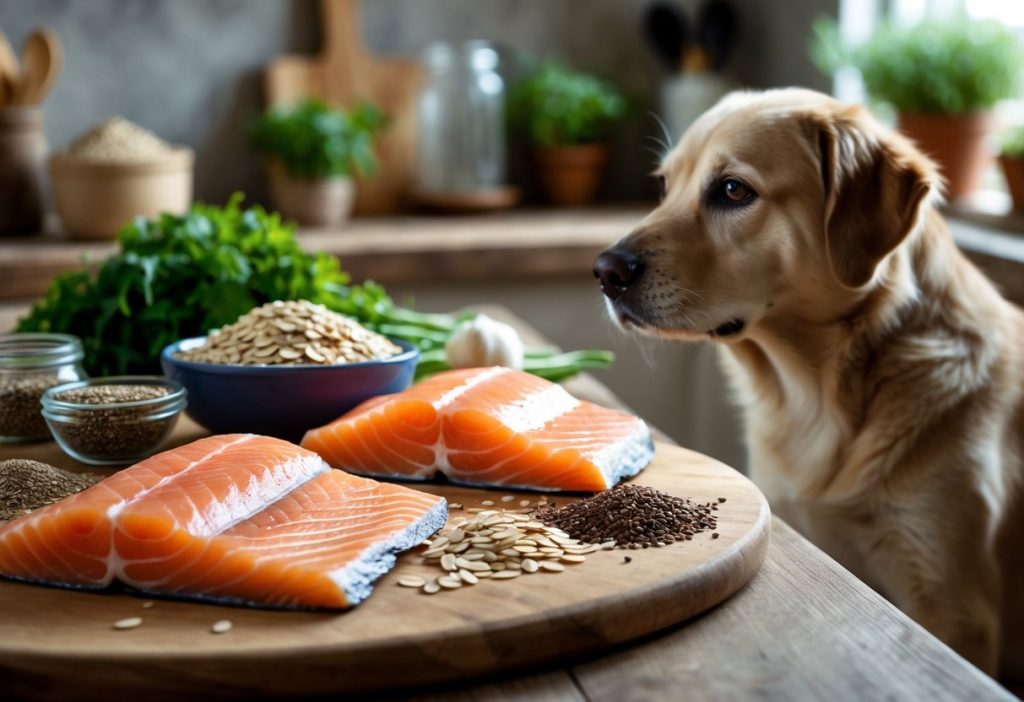
This simple recipe takes about 15 minutes to prepare and serves one senior dog for two days. The mix combines fresh salmon with oats and a few extras to create a balanced meal.
Ingredients
Fresh Components:
- 8 oz raw salmon fillet (skin removed, bones checked)
- 1/2 cup rolled oats (old-fashioned, not instant)
- 1 tablespoon coconut oil
- 1/4 cup plain Greek yogurt
Optional Add-ins:
- 1 teaspoon ground flaxseed
- 1/4 cup blueberries
- Pinch of turmeric
The salmon should smell like the ocean, not like last week’s gym socks. Fresh is best, but frozen works if thawed completely.
Old-fashioned oats work better than instant because they hold their texture. Instant oats turn into mush faster than a senior dog’s enthusiasm for bath time.
Greek yogurt adds probiotics for digestion. Skip the flavored kinds unless your dog enjoys artificial strawberry drama.
Steps
Prep the salmon by cutting it into bite-sized chunks. Check twice for bones because nobody wants a trip to the emergency vet.
Soak the oats in warm water for 10 minutes until they soften. Drain any excess water.
Mix everything together in a large bowl. The coconut oil should blend evenly throughout.
Portion the mixture into two servings. Store one portion in the fridge for tomorrow.
Serve at room temperature because frozen salmon chunks are about as appealing as frozen tennis balls. Let it sit for a few minutes if it’s too cold.
Benefits Of This Recipe
This raw salmon and oats mix offers cost-effective nutrition while delivering specific health benefits for aging dogs. The recipe provides targeted support for common senior dog concerns through omega-rich ingredients and digestible carbohydrates.
Table – Cost & Calories Per Cup
| Component | Cost Per Cup | Calories Per Cup |
|---|---|---|
| Raw Salmon | $2.50 | 185 |
| Steel-Cut Oats | $0.15 | 150 |
| Total Recipe | $2.65 | 335 |
Senior dogs get more bang for their buck with this recipe. The cost stays reasonable compared to premium senior dog foods that often run $3-4 per cup.
Each cup delivers 335 calories. This amount works well for older dogs who need fewer calories but more nutrients. Most senior dogs need about 20% fewer calories than younger pups.
Health Advantages
The omega-3 fatty acids in salmon act like tiny joint mechanics for creaky senior bones. These healthy fats reduce inflammation and keep joints moving smoothly. They also make coats shinier than a freshly waxed car.
Oats provide gentle fiber that keeps senior digestive systems running like clockwork. The soluble fiber helps regulate blood sugar levels too. This prevents energy crashes that leave older dogs feeling sluggish.
Raw salmon delivers high-quality protein that’s easier to digest than processed kibble. Senior dogs often struggle with digestion, so this gentle protein source works better for sensitive stomachs. The B vitamins in salmon also support brain function in aging pups.
Feeding Table For Different Sized Dogs & Breeds (2 Meals A Day)
Senior dogs come in all shapes and sizes. Some are tiny pocket rockets, while others are gentle giants who think they’re lap dogs.
The feeding amounts below work for most dogs. But remember, every dog is different. Some seniors are couch potatoes, others still think they’re puppies.
| Dog Size | Weight Range | Daily Amount | Per Meal |
|---|---|---|---|
| Toy Breeds | 5-10 lbs | 1/4 – 1/2 cup | 2-4 tbsp |
| Small Breeds | 11-25 lbs | 1/2 – 1 cup | 1/4 – 1/2 cup |
| Medium Breeds | 26-50 lbs | 1 – 2 cups | 1/2 – 1 cup |
| Large Breeds | 51-75 lbs | 2 – 3 cups | 1 – 1.5 cups |
| Giant Breeds | 76+ lbs | 3 – 4 cups | 1.5 – 2 cups |
Active seniors might need more food. Less active dogs might need less.
Check with your vet first. They know your dog better than anyone. Well, except maybe you do.
Watch your dog’s weight and energy. If they’re getting chunky, cut back a little. If they seem hungry all the time, they might need more food.
Split the daily amount into two meals. Morning and evening works best for most dogs.
Variations
This basic salmon and oats recipe can be tweaked for different health needs and dog preferences. Simple ingredient swaps and portion adjustments help target specific issues like weight management, allergies, and digestive problems.
Weight Loss
Dogs carrying extra pounds need fewer calories but more fiber to feel full. Replace half the oats with plain canned pumpkin or steamed green beans.
Cut the salmon portion by 25% and add diced cucumber or carrots. These low-calorie veggies add crunch without the guilt.
Portion Control Tips:
- Use a kitchen scale instead of eyeballing portions
- Feed smaller meals 3 times daily instead of 2 large ones
- Add extra water to make the meal feel bigger
Skip any added oils if your chunky buddy needs to slim down. The salmon already provides healthy fats.
Puppies
Growing puppies need more protein and calories than senior dogs. Increase the salmon portion by 50% and add one scrambled egg to boost protein.
Cook the oats longer to make them softer for tiny teeth. Add a tablespoon of plain Greek yogurt for extra calcium and probiotics.
Puppy Modifications:
- Chop ingredients into smaller pieces
- Add bone meal powder for growing bones (consult your vet first)
- Feed 3-4 smaller portions throughout the day
Young dogs burn energy like furry rocket ships. They can handle the extra calories that would make older dogs pudgy.
Senior Dogs
The original recipe works great for older dogs, but some tweaks help aging joints and slower digestion. Add a pinch of turmeric for natural anti-inflammatory benefits.
Cook the oats until they’re very soft and easy to chew. Senior dogs with dental issues will appreciate the mushy texture.
Senior-Friendly Additions:
- Bone broth instead of water for cooking oats
- Mashed sweet potato for extra fiber
- Fish oil supplement (ask your vet about dosage)
Consider adding glucosamine powder if your old-timer creaks when getting up. Their joints need all the help they can get.
Common Allergies
Some dogs react to salmon or oats with itchy skin or upset stomachs. Swap salmon for other fish like mackerel or sardines if they’re sensitive.
Replace oats with quinoa or brown rice for dogs with grain allergies. These alternatives still provide good carbs and fiber.
Allergy-Safe Swaps:
- Instead of salmon: Mackerel, sardines, or white fish
- Instead of oats: Quinoa, brown rice, or sweet potato
- Avoid: Chicken, beef, wheat, and corn (common triggers)
Watch for signs like excessive scratching, ear infections, or loose stools. These often point to food sensitivities.
Picky Eaters
Finicky dogs might turn their noses up at plain salmon and oats. Add a small amount of low-sodium chicken broth to make it smell more appealing.
Mix in a spoonful of plain pumpkin or sweet potato for natural sweetness. Most dogs love these flavors.
Taste Enhancers:
- Bone broth for extra flavor
- Freeze-dried liver powder (use sparingly)
- Fresh herbs like parsley or cilantro
Warm the mixture slightly before serving. The heat releases more aroma and makes it more tempting for picky pups.
Digestion
Dogs with sensitive stomachs need gentler ingredients and smaller portions. Cook the oats extra long until they’re almost like porridge.
Add plain pumpkin or sweet potato for soluble fiber that soothes the digestive tract. Start with small amounts and increase gradually.
Digestive Support:
- Plain Greek yogurt with probiotics
- Ginger powder (tiny pinch only)
- Bone broth instead of water
Feed smaller portions more frequently instead of one large meal. This prevents overwhelming a touchy tummy.
Joints
Dogs with arthritis or joint pain benefit from anti-inflammatory ingredients. Add a small amount of turmeric and ground ginger to the mix.
Include mussels or other shellfish if available. They contain natural glucosamine and chondroitin for joint support.
Joint-Friendly Additions:
- Green-lipped mussel powder
- Turmeric with black pepper (improves absorption)
- Extra fish oil for omega-3s
Consider adding bone broth made from grass-fed bones. The natural collagen helps maintain healthy cartilage.
Skin & Coat
Dogs with dull coats or dry skin need extra omega-3 fatty acids. Add an extra teaspoon of fish oil to boost the healthy fats.
Include zinc-rich ingredients like pumpkin seeds (ground up) or a small amount of beef liver. Zinc deficiency often shows up as poor coat quality.
Coat-Boosting Ingredients:
- Extra fish oil or flaxseed oil
- Ground pumpkin seeds
- Coconut oil (small amounts)
- Vitamin E supplement
Eggs are another great addition for shiny coats. The biotin and protein help hair grow strong and glossy.
Seasonal Switches
Senior dogs get pickier about food when seasons change. Their old bones can tell when winter is coming.
Summer adjustments work best for hot days. Add more water to the mix when temps rise. Less oats help too since dogs eat less in heat.
Winter tweaks help keep energy up. Extra salmon gives more fat for warmth. More oats fill hungry bellies when dogs burn calories staying warm.
Spring brings new energy to old pups. They might want smaller meals more often. Their joints feel better so they move around more.
Fall makes dogs sleepy like people. The recipe works great as-is during autumn months.
| Season | Change | Why |
|---|---|---|
| Summer | More water, fewer oats | Heat makes dogs eat less |
| Winter | Extra salmon and oats | Cold weather needs more calories |
| Spring | Smaller, frequent meals | Dogs get more active |
| Fall | Keep recipe the same | Works perfectly as-is |
Watch for signs the dog wants changes. Leaving food behind means too much. Begging for more means not enough.
Temperature matters more than the calendar. A warm winter day might need summer tweaks. A cold spring morning might need winter amounts.
Senior dogs have earned the right to be picky. Their taste buds know what their bodies need.
Storage Advice
Raw salmon doesn’t mess around when it comes to spoilage. It needs cold temps and fast service, just like a grumpy customer at a fancy restaurant.
Keep it frozen until the dog is ready to eat. Raw fish turns into a science experiment nobody wants to see.
Once thawed, the clock starts ticking. Use the mix within 24 hours or toss it out. Nobody wants to explain food poisoning to their vet.
Refrigerator storage rules:
- Temperature below 40°F
- Sealed container only
- Bottom shelf to prevent drips
- Use within one day
The oats can hang out at room temperature before mixing. They’re the chill friend in this relationship. Store them in a dry container away from moisture.
Never refreeze thawed salmon. It’s like trying to un-ring a bell – doesn’t work and makes everything worse.
Smart dog parents prep small portions. Freeze the mix in daily serving sizes using ice cube trays or small containers.
Freezer life:
- Raw salmon mix: 2-3 months
- Plain oats: 6 months
Watch for weird smells or slimy textures. Trust that nose – if it smells fishy in a bad way, it probably is.
Clean all surfaces and tools with hot soapy water after prep. Raw fish leaves behind invisible party crashers that can make everyone sick.
Batch Cooking Tips
Making this salmon and oats mix in big batches saves time. Dog owners can prep a week’s worth in one go.
Store portions in the freezer. Individual serving containers work best. Label each container with the date and dog’s name if multiple pets live in the house.
Raw salmon spoils fast. Prep only what the dog will eat in 2-3 days for fridge storage.
| Storage Method | Time Limit | Best For |
|---|---|---|
| Refrigerator | 2-3 days | Daily portions |
| Freezer | 1 month | Weekly prep |
| Ice cube trays | 2 weeks | Small dogs |
Ice cube trays make perfect portion control. Each cube equals about one tablespoon. Senior dogs get excited when they hear the plop of frozen cubes hitting their bowl.
Cook oats in large batches. They stay fresh longer than raw fish. Store cooked oats separately and mix with salmon right before serving.
Smart shopping saves money. Buy salmon in bulk when it goes on sale. Freeze extra portions immediately.
Some dogs prefer their mix slightly thawed. Take frozen portions out 30 minutes before mealtime. The salmon gets soft but stays cool.
Prep day becomes easier with a routine. Cook oats first, portion salmon second, then combine and freeze. Clean-up takes less time when everything happens at once.
Small containers stack better than large ones. Senior dogs eat smaller meals anyway.
Transitioning Steps
Changing a senior dog’s diet requires patience. Their stomachs are more sensitive than a drama queen at a family dinner.
Start with tiny amounts of the raw salmon and oats mix. Mix just one tablespoon into their regular food on day one.
Week 1 Plan:
- Days 1-2: 90% old food, 10% new mix
- Days 3-4: 80% old food, 20% new mix
- Days 5-7: 70% old food, 30% new mix
Some dogs will gobble up the new food immediately. Others will stare at their bowl like it insulted their mother.
Week 2 Plan:
- Days 8-10: 50% old food, 50% new mix
- Days 11-14: 25% old food, 75% new mix
Watch for loose stools or stomach upset. If their digestive system throws a tantrum, slow down the process.
Senior dogs need extra time to adjust. Their bodies work slower than a government office on Friday afternoon.
Final Week:
- Days 15-21: 100% new raw salmon and oats mix
Keep fresh water available at all times. The raw food will make them thirstier than usual.
If they refuse to eat for more than 24 hours, contact a vet. Stubborn is normal, but starving is not.

My name is Danny Jackson and I’m the CEO and Chief Editor behind Petloverguy.com. After spending a decade working with vets and private clients as an animal behavioral and nutritional specialist I co-founded Pet Lover Guy to help other pet parents learn how to interact with, and make the most of the time that they spend with their adopted and rescued best pet friends.
Working with Ella, our chihuahua rescue, we seek to help all dog and cat lovers have the happiest life possible.