Disclaimer:
This article is for informational purposes only and is not a substitute for professional veterinary advice. Always check with your vet before adding new foods to your dog’s diet — especially if your pup has allergies, medical issues, or a talent for eating things they shouldn’t.
Why Are Dog Owners Going Bananas for Blueberries (or… Blueberries for Bananas)?
Dog parents everywhere are looking for ways to make their furry friend’s diet a little healthier — without sacrificing taste. Enter the blueberry: a tiny, juicy, superhero fruit that’s been stealing the spotlight (and maybe a few dog treats) lately.
These little blue gems aren’t just cute. They’re packed with antioxidants, vitamins, and fiber, all wrapped in a bite-sized package that most dogs absolutely love. Think of them as nature’s candy — but the kind that won’t send your dog bouncing off the walls or begging for a juice cleanse.
Let’s sniff out why blueberries deserve a spot in your pup’s bowl.
1) Antioxidants: The Tiny Bodyguards Inside Each Berry
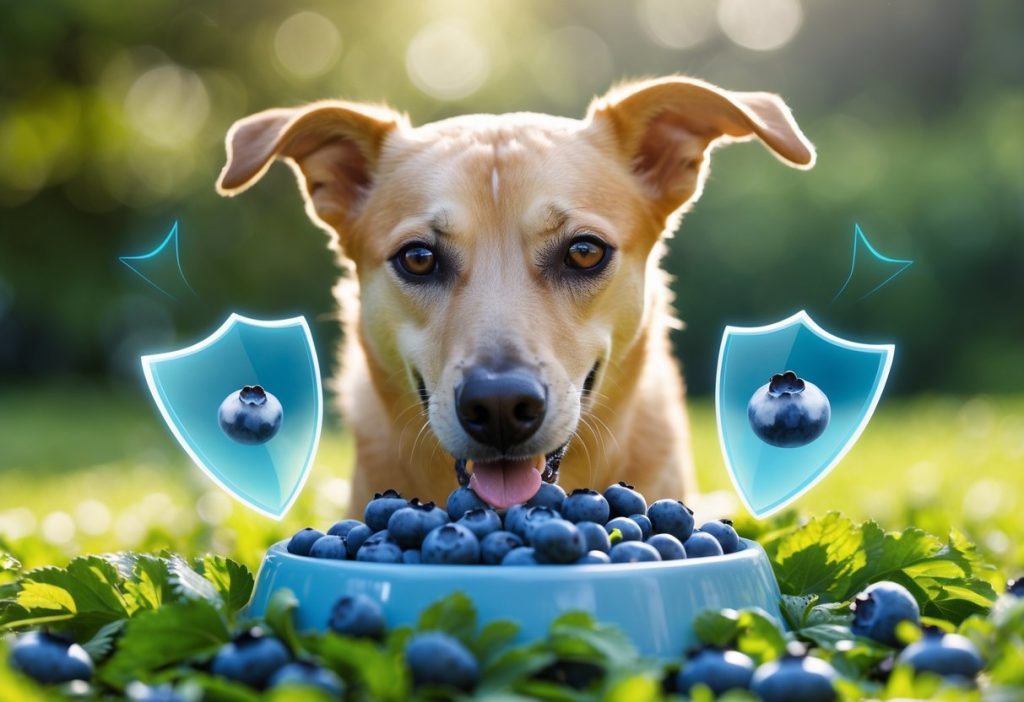
Blueberries are bursting with antioxidants — natural compounds that protect your dog’s cells from damage caused by “free radicals.” (Free radicals are basically the villains in your dog’s body story — they sneak around trying to make trouble, and antioxidants show up wearing tiny capes.)
The deep blue color in blueberries comes from anthocyanins, a type of antioxidant that helps keep your dog’s body running smoothly. Think of them as microscopic superheroes patrolling your pup’s bloodstream, keeping things calm and orderly.
Even though dogs make some antioxidants naturally, a few blueberries can give their system a little backup — like calling in the superhero sidekicks when things get busy.
2) Low-Calorie Treats That Don’t Expand the Waistline (or the Collar)
Let’s be honest: dogs don’t care about calories. They care about snacks. But as responsible humans, we have to keep an eye on their waistlines — because “chunky” might be cute, but it’s not healthy.
Here’s the good news: each blueberry has about one calorie. That’s it. You could toss your dog a handful of blueberries and still not come close to the calorie count of one commercial biscuit.
So when your pup gives you those “I’ve never eaten in my life” eyes, you can hand over a few blueberries guilt-free. They’ll think they’re getting dessert; you’ll know you’re giving them a health boost. Everyone wins.
3) Fiber: Helping with Those… Ahem… Backyard Missions
Blueberries have a secret weapon — fiber. It’s not glamorous, but it’s essential for a happy digestive system.
Fiber helps keep everything moving along nicely, which means fewer tummy troubles and more predictable potty breaks. You know those long, awkward “is he ever going to go?” moments in the yard? Blueberries might just help shorten them.
Think of fiber as a gentle broom for your dog’s insides. It sweeps through, tidies up, and keeps the system running smoothly — no drama, no waiting around with a leash in one hand and regret in the other.
4) Vitamin C: A Little Extra Support for Superdogs
Dogs are pretty amazing — they actually make their own vitamin C. But when they’re stressed, sick, or just getting older, their bodies might not produce as much as they need.
That’s where blueberries come in. They offer a small, natural source of vitamin C, which helps support the immune system, keeps gums and teeth healthy, and assists in healing little cuts or scrapes from overenthusiastic zoomies.
It’s not a replacement for medical care, but it’s a nice nutritional bonus. And unlike vitamin pills, blueberries actually taste good. (Try getting your dog to swallow a pill without turning it into a full-blown drama scene.)
5) Natural Sweetness That Dogs Actually Go Crazy For
Dogs might not crave sugar like humans do, but they definitely appreciate a little sweetness. Blueberries bring a mild, natural sweetness that makes dogs light up like they just heard the word “walk.”
Most store-bought treats are basically crunchy cardboard with flavoring. Blueberries? They’re juicy, flavorful, and fun to eat. The best part: they’re naturally sweet — no syrups, no additives, no weird mystery ingredients.
You can toss a few into your dog’s kibble, use them as training treats, or freeze them for a crunchy summer snack. Either way, your dog will think you’ve turned into a gourmet chef.
6) Brain Power: Because Fetch Requires Strategy
Blueberries don’t just help the body — they help the brain, too. The antioxidants in blueberries protect brain cells from damage, which may help keep your dog’s mind sharp and focused.
That means your pup might finally remember where they buried that tennis ball last week… or at least stop bringing you rocks instead.
Studies suggest that antioxidant-rich foods can support cognitive function in older dogs, helping them stay alert and mentally active. So if your senior pup is starting to forget their favorite hiding spots, a few blueberries might help keep that brain buzzing.
7) Immune System Boost — The Science Behind the Squirrels
Blueberries are like tiny reinforcements for your dog’s immune system. The antioxidants and vitamin C inside them help their body fight off everyday stressors and germs.
A strong immune system means fewer sick days and more time chasing squirrels, barking at the mail carrier, or staring dramatically out the window.
If you want to see how this works in action, check out this short video:
It breaks down how these nutrients support your dog’s immune system — and it’s surprisingly fun to watch (even if your dog just wants to nap through it).
8) Anti-Inflammatory Powers: The Post-Chase Recovery Snack
After a big day of running, jumping, and pretending to be a squirrel’s worst nightmare, your dog’s muscles might feel a little sore. Blueberries contain natural plant compounds that help fight inflammation — like a mini spa day for your dog’s body.
Regularly adding blueberries to your dog’s diet may help with joint comfort and recovery, especially for older dogs or those with arthritis.
Bonus tip: frozen blueberries make the perfect “cool-down” treat after playtime. They’re crunchy, refreshing, and way cheaper than a doggy massage.
9) Easy to Add — No Barking Required
Some healthy foods for dogs require prep work (looking at you, sweet potatoes). Blueberries? Just rinse and serve. They’re small enough to toss into kibble, soft enough for most dogs to chew, and tasty enough that even picky eaters approve.
Fresh or frozen both work fine — just skip the canned ones with added sugar. Start with a few berries to make sure your dog’s tummy agrees, then adjust from there.
It’s basically the easiest healthy upgrade you can make to your dog’s diet.
10) Skin and Coat Health: Because Every Dog Deserves to Shine
Nobody wants their dog looking like they just lost a wrestling match with a hairdryer. The nutrients and antioxidants in blueberries help protect skin cells and support a healthy coat.
Vitamin C helps the body make collagen, which keeps skin firm and fur strong. While blueberries don’t contain omega fatty acids (that’s what fish oil is for), they still help keep your dog’s skin happy and their fur glossy.
So yes — your dog might actually look like they just came from a fancy pet spa… without the spa bill.
The Final Fetch
Blueberries are one of those rare treats that check all the boxes:
✅ Healthy
✅ Low-calorie
✅ Easy to serve
✅ Dog-approved
They’re safe for most dogs when given in moderation, and they make a great alternative to processed snacks. Just remember: moderation is key. A handful here and there is perfect — not a whole pint.
So go ahead — toss a few blueberries into your dog’s bowl, watch their tail wag, and enjoy being the kind of pet parent who makes healthy look fun.

My name is Danny Jackson and I’m the CEO and Chief Editor behind Petloverguy.com. After spending a decade working with vets and private clients as an animal behavioral and nutritional specialist I co-founded Pet Lover Guy to help other pet parents learn how to interact with, and make the most of the time that they spend with their adopted and rescued best pet friends.
Working with Ella, our chihuahua rescue, we seek to help all dog and cat lovers have the happiest life possible.