When dog parents start researching homemade meals, they quickly discover that not all grains are created equal – and some popular choices might be doing more harm than good. Rice, especially white rice, contains traces of arsenic that can accumulate over time in both dogs and humans, making millet and quinoa much safer alternatives for furry family members. While Fido might not complain about his dinner choices, savvy pet owners are swapping out that traditional rice for these nutritional powerhouses.
The truth is, most dog owners have been unknowingly serving up a side of heavy metals with their pup’s homemade meals. Rice has been the go-to grain for decades, but recent research reveals some unsettling facts about what’s lurking in those innocent-looking white grains. Meanwhile, millet and quinoa are sitting pretty on the shelf, packed with complete proteins and essential nutrients that make rice look like the nutritional equivalent of cardboard.
This article will dig into why rice isn’t always the best friend to man’s best friend, explore the impressive health benefits of millet and quinoa, and provide some tail-wagging recipes that’ll have dogs everywhere wondering why they ever settled for boring old rice. From heart-healthy minerals to easy-to-digest proteins, these ancient grains are about to revolutionize dinner time for four-legged food critics everywhere.
Why Rice Isn’t Always Nice for Dogs (and Humans, Too)
Rice might seem like the perfect bland food for upset tummies, but it comes with some sneaky problems. White rice packs arsenic and spikes blood sugar like a caffeinated squirrel, while brown rice plays slightly nicer but still isn’t winning any health awards.
White Rice and Arsenic: The Not-So-Fun Facts
White rice has a dirty little secret – it soaks up arsenic like a sponge at a toxic waste party. Rice plants absorb this heavy metal from soil and water, making every grain a tiny arsenic delivery system.
The FDA found arsenic levels in rice that would make a chemistry teacher nervous. Dogs eating rice regularly get exposed to this stuff, which can cause cancer and other health problems over time.
White rice gets the worst arsenic levels because the outer layers (which get removed) actually help filter some toxins. So when manufacturers strip away the bran and germ, they leave behind concentrated badness.
Pet owners think they’re being helpful with rice for digestive issues, but they might be serving up a side of poison. The smaller the dog, the bigger the problem since arsenic builds up in tiny bodies faster.
How Rice Types Stack Up: White Rice vs Brown Rice
Brown rice beats white rice in the nutrition game, but that’s like saying getting punched is better than getting kicked. Brown rice keeps its fiber and vitamins, while white rice gets stripped naked of anything useful.
White rice turns into sugar faster than a magic trick. Brown rice takes its sweet time, thanks to fiber that slows digestion down.
But here’s the plot twist – brown rice can actually have more arsenic than white rice because arsenic loves hanging out in the outer layers. So dogs get more fiber but also more toxins.
Nutritional Comparison:
- White rice: High glycemic index, low fiber, moderate arsenic
- Brown rice: Lower glycemic index, high fiber, potentially higher arsenic
Neither option makes nutritionists do happy dances.
Blood Sugar Rollercoasters: Glycemic Index Woes
Rice sends blood sugar levels on a roller coaster ride that would make Six Flags jealous. White rice has a glycemic index around 73, which means it hits the bloodstream like a sugar bomb.
Dogs with diabetes face serious problems when rice spikes their glucose. Feeding rice regularly can mess with insulin balance and make managing diabetes harder than herding cats.
Even healthy dogs suffer from these blood sugar swings. High spikes followed by crashes leave them feeling hungrier and more likely to beg for extra food.
The constant glucose roller coaster puts stress on the pancreas over time. This organ works overtime trying to pump out enough insulin, potentially leading to diabetes development in dogs who never had it before.
The Millets and Quinoa Power Hour: Superfoods for Your Dog’s Bowl
Millet and quinoa pack more nutritional punch than a superhero’s breakfast, delivering complete proteins, essential amino acids, and fiber that keeps blood sugar stable. These gluten-free grains offer vegan-friendly plant-based protein while supporting weight management through their high satiety factor.
Nutritional Knockouts: Protein, Fiber, and Essential Amino Acids
Quinoa struts into the ring as a complete protein champion, containing all nine essential amino acids that dogs need. This ancient grain delivers about 8 grams of protein per cooked cup, making it a serious contender in the plant-based protein Olympics.
Millet brings its own nutritional comedy show, packed with B vitamins and magnesium. It contains roughly 6 grams of protein per cooked cup, plus enough fiber to keep digestive systems running smoother than a well-oiled machine
Beyond the Grain: Vitamins, Minerals, and Heart-Healthy Benefits
Millet and quinoa pack more nutritional punch per bite than rice, delivering essential minerals like iron, magnesium, and zinc alongside heart-protecting compounds. These grains also help regulate blood pressure and blood sugar levels better than their rice counterpart.
Micronutrient Madness: Iron, Zinc, Magnesium, and More
Millet turns out to be quite the show-off when it comes to minerals. Pearl millet delivers 11.6 grams of protein and impressive amounts of iron, zinc, copper, potassium, magnesium, phosphorus, and manganese.
Finger millet takes calcium bragging rights to new heights. With 364 mg of calcium per 100 grams, it makes milk jealous and bones happy.
Quinoa joins the mineral party with its own impressive lineup. The grain contains magnesium for muscle function, phosphorus for bone health, and folate for cell division.
Iron content in these grains helps prevent anemia. Foxtail millet specifically improves hemoglobin levels and prevents anemia.
Rice, meanwhile, sits in the corner with much lower mineral content. White rice loses most of its nutrients during processing, leaving behind mostly empty calories and those pesky arsenic traces.
Antioxidants, Healthy Fats, and Cardiovascular Perks
These grains don’t just feed dogs – they protect their hearts too. Millet contains antioxidants that combat oxidative stress and lower the risk of chronic diseases.
Pearl millet brings omega-3 fatty acids to the table. It’s high in alpha-linolenic acid, eicosapentaenoic acid, and docosahexaenoic acid – the same healthy fats found in fish.
Quinoa contains phytosterols, saponins, and phenolic compounds. These bioactive compounds provide medicinal properties that support heart health.
Antioxidant activity helps reduce inflammation throughout the cardiovascular system. Kodo millet is particularly rich in phytochemicals and antioxidants, making it effective in combating oxidative stress.
Rice offers minimal antioxidants, especially white rice. Brown rice has some benefits, but it still can’t compete with millet and quinoa’s antioxidant arsenal.
Blood Pressure and Blood Sugar Regulation
Both grains help keep blood sugar stable, unlike rice’s blood sugar roller coaster. Millets have a low glycemic index, making them excellent for managing blood sugar levels.
Fiber content plays a major role here. Pearl millet is rich in fiber and has a low glycemic index, which helps regulate blood sugar levels.
Potassium in these grains supports healthy blood pressure. Little millet contains potassium along with other minerals that contribute to overall cardiovascular health.
Magnesium acts as nature’s chill pill for blood vessels. It helps relax arterial walls and supports proper heart rhythm.
Quinoa has a better glycemic index than millets, which can help control blood sugar even more effectively. Both options leave rice in the dust when it comes to blood sugar management.
The high fiber content also slows digestion, preventing those dramatic blood sugar spikes that make pancreases work overtime.
Unleashing Grainy Goodness: Millet and Quinoa Recipes for Dogs
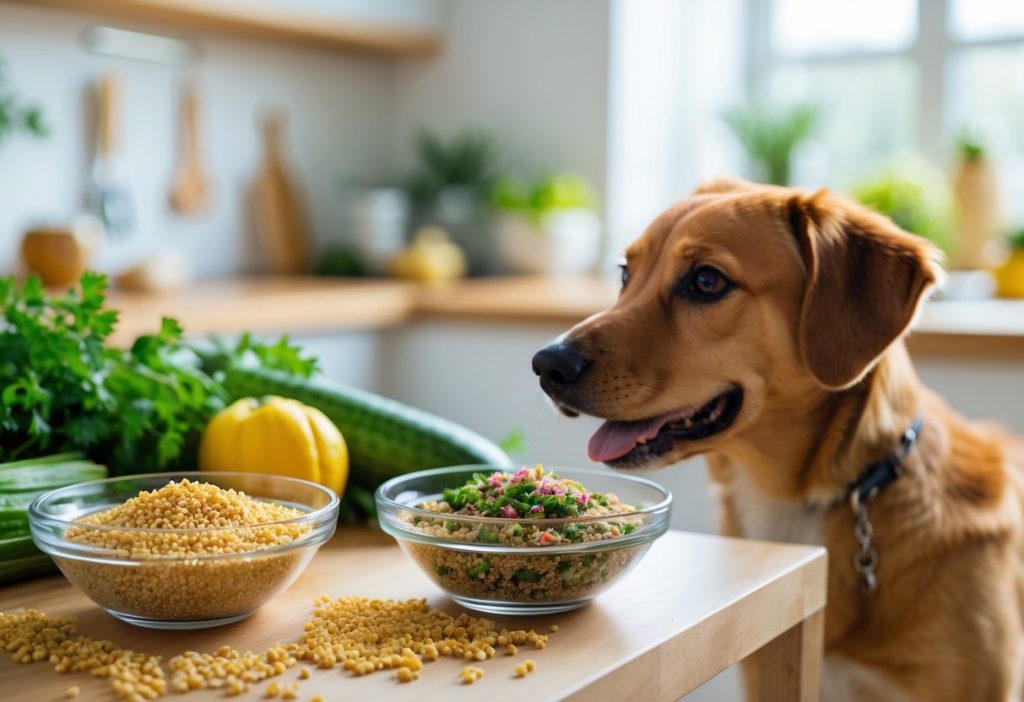
These ancient grains make perfect rice substitutes for dogs, offering complete proteins and easy digestion without the arsenic concerns. Simple cooking methods and creative combinations turn these nutritious grains into tail-wagging meals that even picky pups will devour.
Simple Millet and Quinoa Meals for Furry Friends
Cooking millet and quinoa for dogs is easier than teaching them not to steal socks. Both grains cook similarly to rice but pack way more nutritional punch.
For basic millet, dog parents should use a 1:2 ratio with water. Bring it to a boil, then simmer for 15-20 minutes until fluffy. The grain becomes creamy and mild, perfect for sensitive stomachs.
Quinoa needs a quick rinse first to remove its bitter coating. Then it’s 1:1.5 with water, simmered for 12-15 minutes. The little seeds pop open when done, looking like tiny life preservers.
Smart cooking tips:
- Cook large batches and freeze portions
- Add low-sodium chicken broth for extra flavor
- Mix in cooked vegetables like carrots or green beans
- Let grains cool completely before serving
Both grains store well in the fridge for up to five days. Dogs often prefer them slightly warm, not hot enough to burn their eager tongues.
Delicious Grain Combos: Quinoa Salad, Porridge, and Biryani Inspirations
Who says dogs can’t enjoy gourmet grain dishes? These creative combinations turn simple ingredients into restaurant-worthy meals for four-legged food critics.
A dog-friendly quinoa salad mixes cooked quinoa with diced cooked chicken, steamed broccoli, and a splash of bone broth. It’s like a fancy grain bowl but without the Instagram pressure.
For porridge lovers, combine cooked millet with plain Greek yogurt and mashed banana. This creamy mixture works great for senior dogs or pups recovering from stomach upset.
Biryani-inspired dog meals include:
- Quinoa with turmeric, cooked ground turkey, and peas
- Millet with cinnamon, sweet potato, and lean beef
- Mixed grains with parsley and fish
The benefits of grains for dogs include millet, oats, and quinoa for energy and digestive support. These combinations provide variety while keeping nutritional balance in check.
Grain Swaps for Dog-Safe Versions of Human Favorites
Traditional rice dishes get a healthy makeover when millet and quinoa step in as the leading actors. These swaps keep the comfort food vibes while ditching the arsenic drama.
Khichdi becomes a powerhouse meal using quinoa instead of rice. Mix it with split yellow lentils, turmeric, and cooked vegetables. Dogs love this soft, easily digestible combination that’s gentle on upset tummies.
Rice pudding transforms into a special treat using millet, unsweetened almond milk, and a touch of honey. Skip the sugar and artificial flavors that make human versions unsuitable for pups.
Pulao-style dishes work beautifully with quinoa as the base. Add cooked chicken, peas, and dog-safe spices like turmeric or ginger. The result looks fancy but takes less effort than brushing a golden retriever.
Even simple fried rice gets better with quinoa. Use coconut oil, scrambled eggs, and diced cooked vegetables. The grains hold flavors well and won’t clump together like overcooked rice often does.

My name is Danny Jackson and I’m the CEO and Chief Editor behind Petloverguy.com. After spending a decade working with vets and private clients as an animal behavioral and nutritional specialist I co-founded Pet Lover Guy to help other pet parents learn how to interact with, and make the most of the time that they spend with their adopted and rescued best pet friends.
Working with Ella, our chihuahua rescue, we seek to help all dog and cat lovers have the happiest life possible.